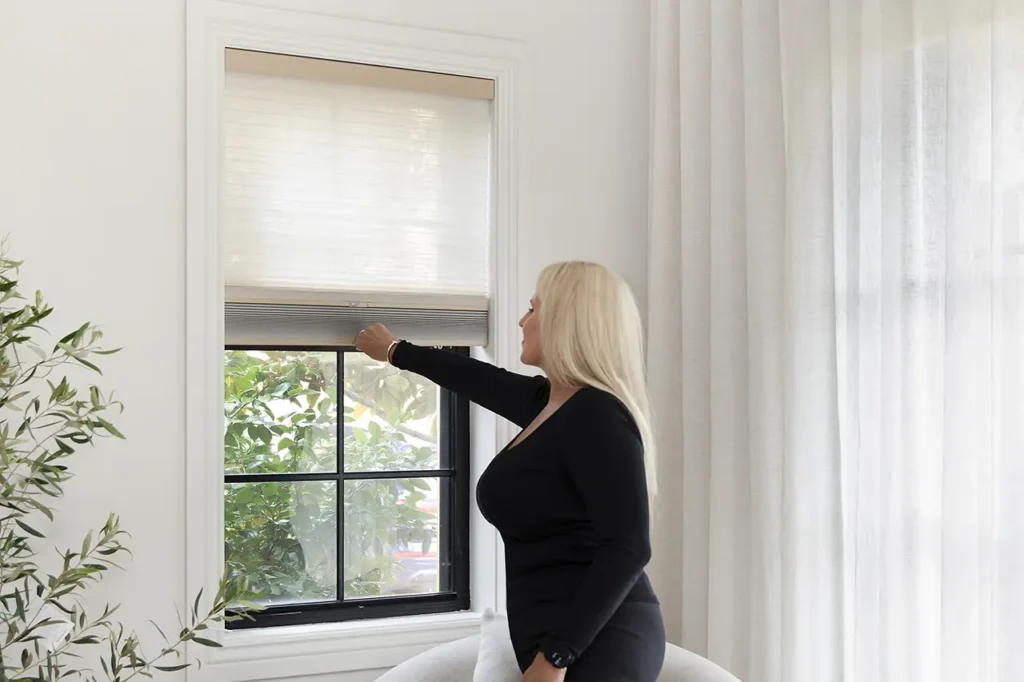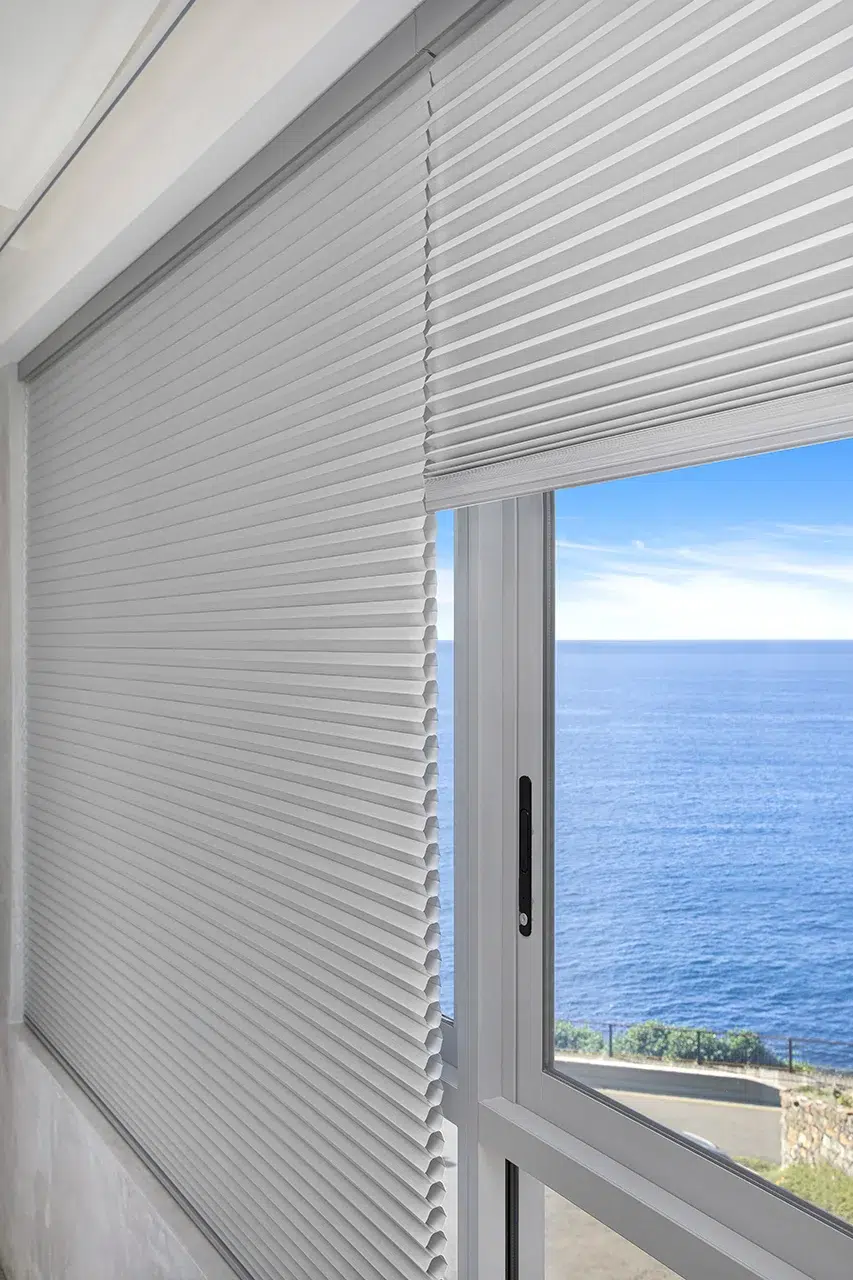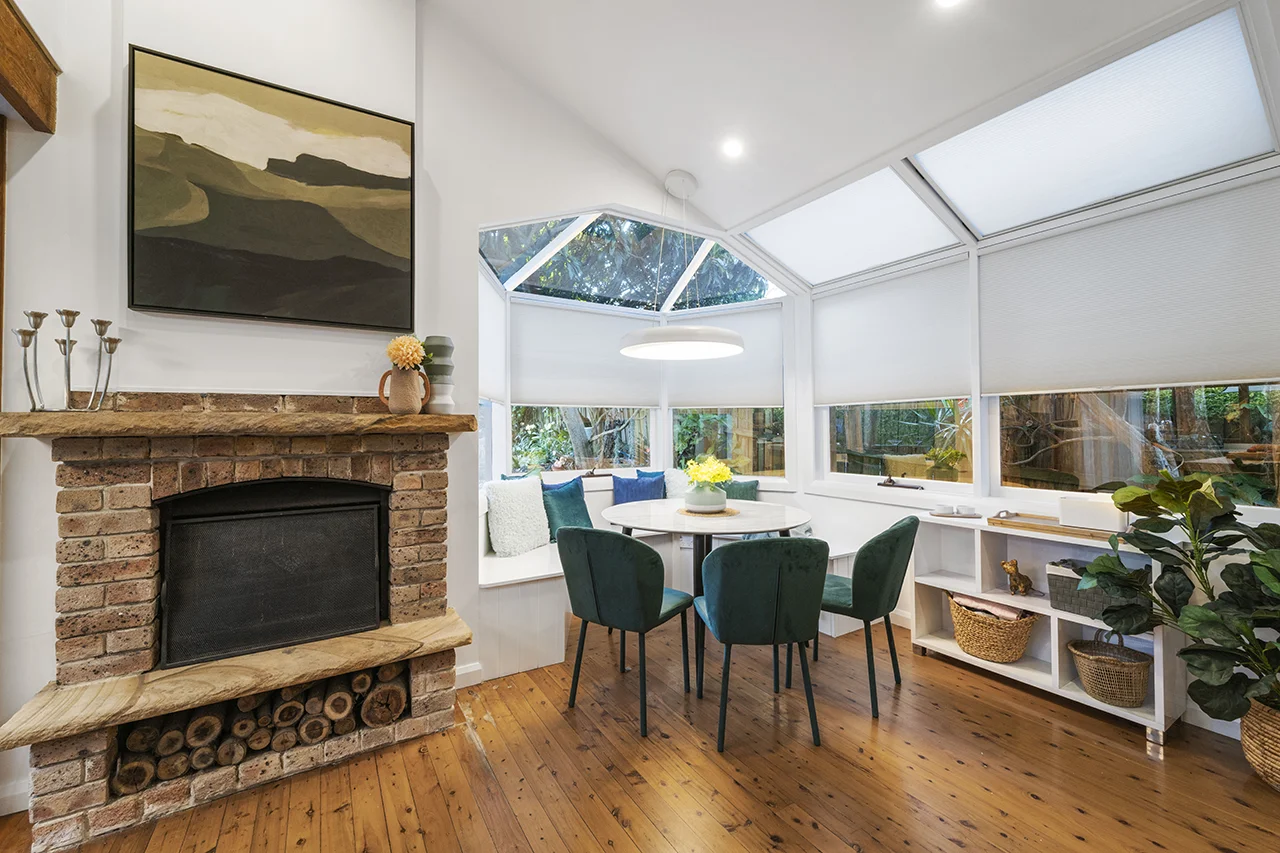


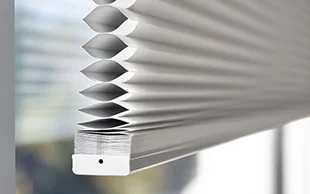

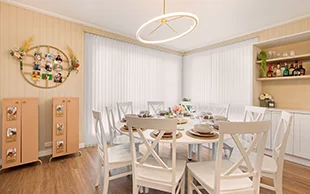
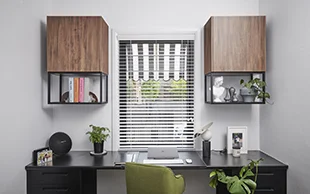

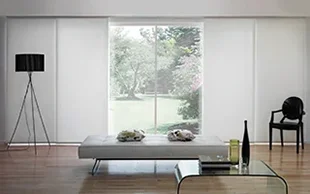
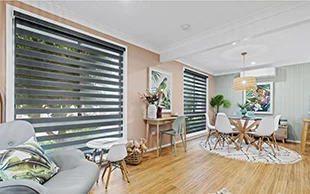





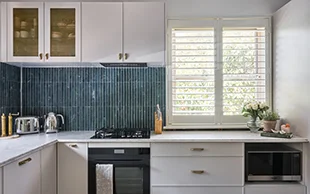

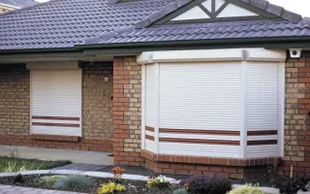
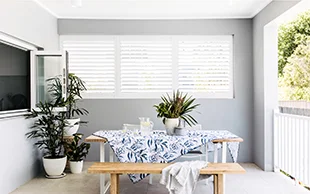




If you’ve settled on a honeycomb blind, there are actually two separate decisions still ahead of you, and it’s easy to mix them up. The first is operating style: how the blind itself moves (does it rise from the bottom, drop from the top, or do both?). The second is control: how you physically operate it day to day (cord, cordless, or motor). Honeycomb blinds offer more flexibility across both of these than almost any other blind style, which is genuinely useful, but only if you know which combination actually suits your room.
Operating Style
Bottom-Up (Standard)
This is the default, and it works the way most people expect a blind to work: it raises from the bottom and stacks neatly at the top, similar to a roller blind. If you don’t have a specific reason to choose otherwise, this is the standard, reliable option.
Top-Down
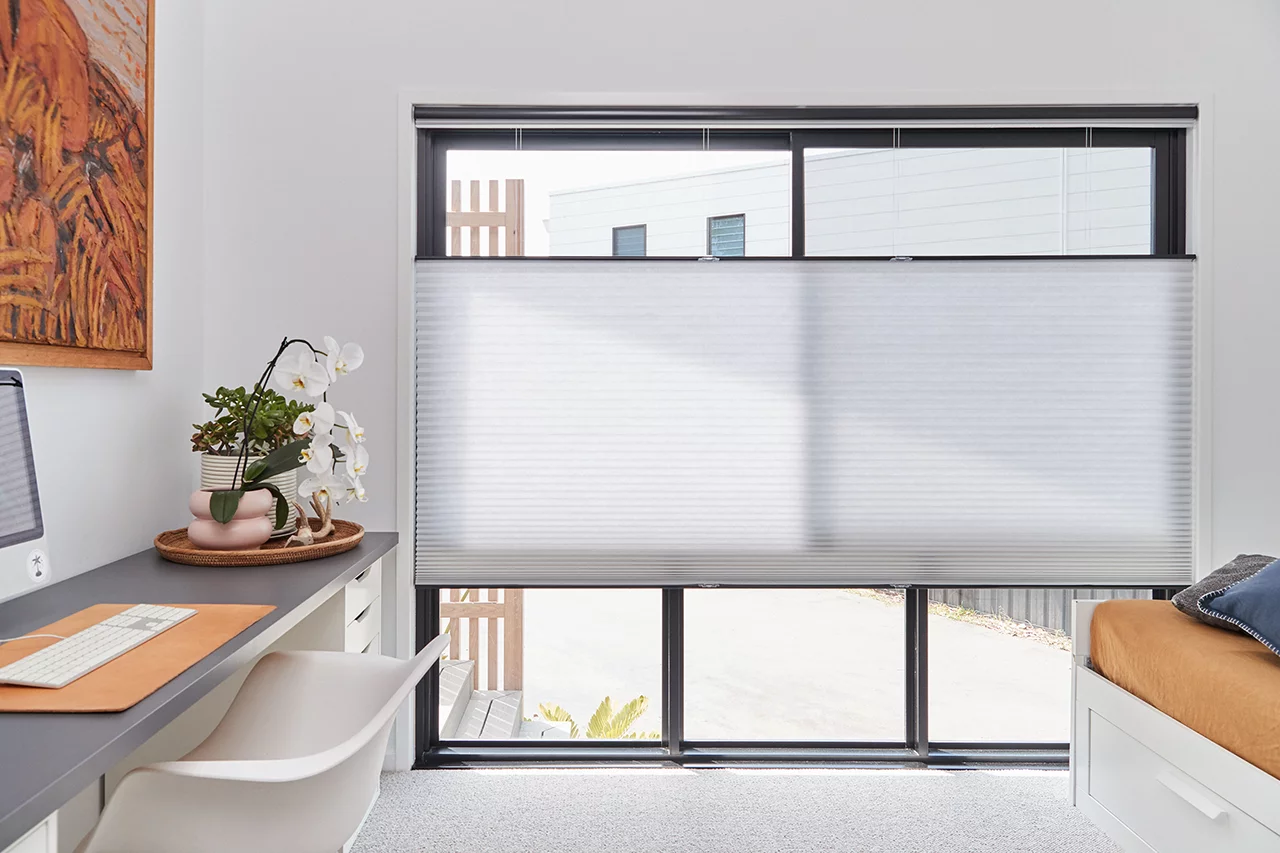
A top-down blind does the opposite, it stacks at the bottom and comes down from the top. This is a great option for windows where you want light in at the top while keeping privacy low, such as a street-facing window where passers-by are at eye level with the lower half of the glass.
Top-Down/Bottom-Up (TDBU)
This is where honeycomb blinds really stand apart from other window coverings. A TDBU blind lets you move the top rail down and the bottom rail up independently, so you might drop the top a little for light while keeping the bottom raised for privacy, or any combination in between. In practice, a single TDBU honeycomb blind can do what would otherwise take two separate blinds (like a sunscreen roller plus a blockout roller) to achieve.
Duo Light (Day & Night)
A duo light blind combines two fabrics in one unit, typically a blockout fabric and a light-filtering fabric, so you get two distinct looks and functions from what appears to be a single, identical blind. It’s a good option where a room needs to switch between “fully dark” and “soft light” depending on the time of day, without swapping blinds or adding a second one.
Control Options
Once you’ve settled on how the blind moves, the second decision is how you’ll actually operate it.
Cord Lock
A corded lock mechanism, similar to a Venetian blind. It’s a straightforward, entry-level option and works well on smaller blinds.
Cord Loop
A continuous nylon cord running down the side, operating much like a roller blind. This takes the weight of larger or heavier blinds more comfortably than a cord lock, and is a common choice as width increases.
Cordless
No cords at all, you push or pull the blind by hand, and it stops wherever you release it. This is a clean, simple option best suited to smaller windows that are easy to reach, since there’s no mechanism sitting in front of the fabric to add to the light gap.
Motorised
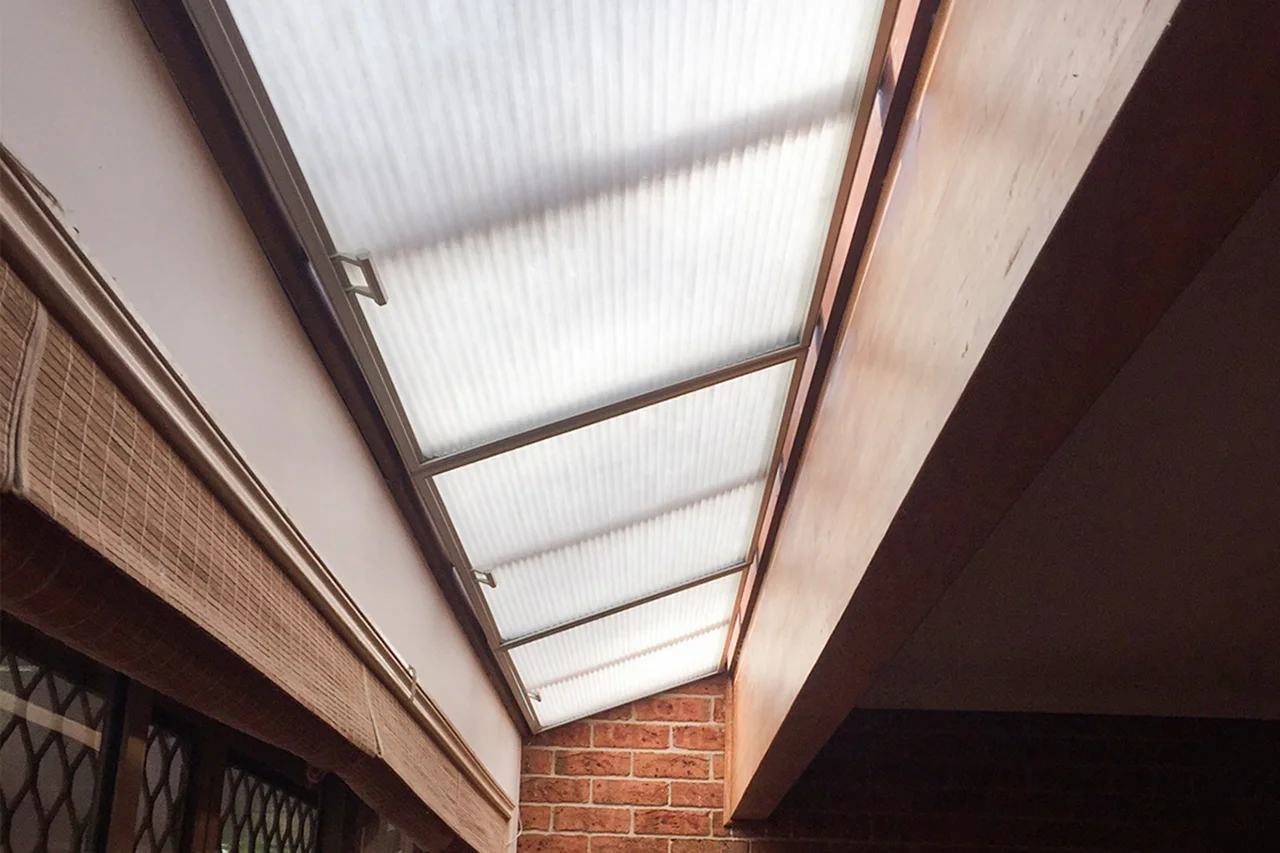
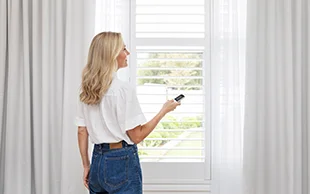
A motor drives the blind, and twin-motor units can run a TDBU blind’s top and bottom independently at the touch of a button or through an app. Motorisation suits large, high, or hard-to-reach windows and skylights particularly well, and it opens up smart home and timer control, useful if you want a blind to open and close automatically at set times of day.
How to Choose, A Practical Guide
The deciding factor for control is almost always size and reach, not personal preference alone. A small, easily reachable window suits cordless, it’s quick, simple, and keeps the light gap as tight as possible. As a blind gets wider or heavier, a cord loop or motor generally becomes the better fit, since it takes the physical weight rather than relying on you to manage it by hand. As a rough guide, once a blind gets wider than around 1800mm, it’s worth stepping up from cordless or cord lock to a cord loop or motor, a large cordless blind can become heavy and awkward to reach comfortably.
It’s also worth thinking about how the blind will be used day to day. If it’s somewhere you’ll open and close it constantly, like a living room or a bedroom, the less physical handling a blind gets over time, the longer it tends to last, which is another point in favour of motorisation for high-use windows.
A Word on Cords and Child Safety
If you’re considering a corded TDBU or duo light blind, there’s one practical detail worth planning for before you order: these styles have cords running down both sides, and the cords are longer than on a standard blind. For child safety, long cords need to be secured to cleats, so it’s worth thinking through where those cleats will actually go, behind the blind on the architrave, or on the side wall, before you commit, particularly over kitchen benches or sliding doors where a dangling cord isn’t practical. It’s a small thing to plan for upfront, and it can save some awkward compromises later. If cord placement is tricky in your space, cordless (where the top is reachable) or motorised are the cleanest ways around the issue entirely.
Explore our full range of honeycomb blinds to see the operating styles and control options in person, or talk to us about motorised blinds for larger or hard-to-reach windows.
Book your FREE Consultation Today!
Frequently Asked Questions
What is a top-down/bottom-up honeycomb blind?
A TDBU honeycomb blind has two independently moving rails, the top can come down for light while the bottom stays up for privacy, or vice versa. It’s one of the most flexible operating styles available and can often replace what would otherwise need two separate blinds.
Can I motorise a honeycomb blind?
Yes. Honeycomb blinds can be motorised, including twin-motor setups for TDBU blinds that let you control the top and bottom independently. Motorisation is a strong option for large, high, or hard-to-reach windows, and for skylights in particular.
Is cordless safe for a nursery?
Cordless is generally the preferred control option for a nursery or child’s room, since there are no long cords to manage. It suits smaller, easily reachable windows well; for larger windows in the same room, motorised is worth considering as an equally cord-free alternative.
This article was written by Shae Rankine, Marketing Coordinator at Wynstan. Shae works closely with product expert Kathy Wang to make sure every piece of content is accurate, practical, and genuinely useful.