There’s an outdoor area in almost every Australian home that doesn’t get used as much as it should. Too hot by 10am in summer. Too exposed to the afternoon wind. Too visible from the street or the neighbour’s fence to feel comfortable sitting out in.
The right outdoor blind changes that. It turns an exposed deck, verandah, pergola, or courtyard into a space you actually want to spend time in, and use more of the year. The difference between a good setup and a frustrating one usually comes down to matching the right product to the right space. This guide covers everything you need to know.
Straight drop outdoor blinds, the versatile starting point
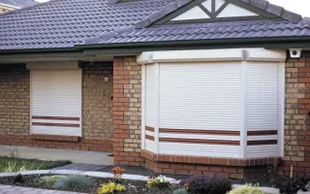
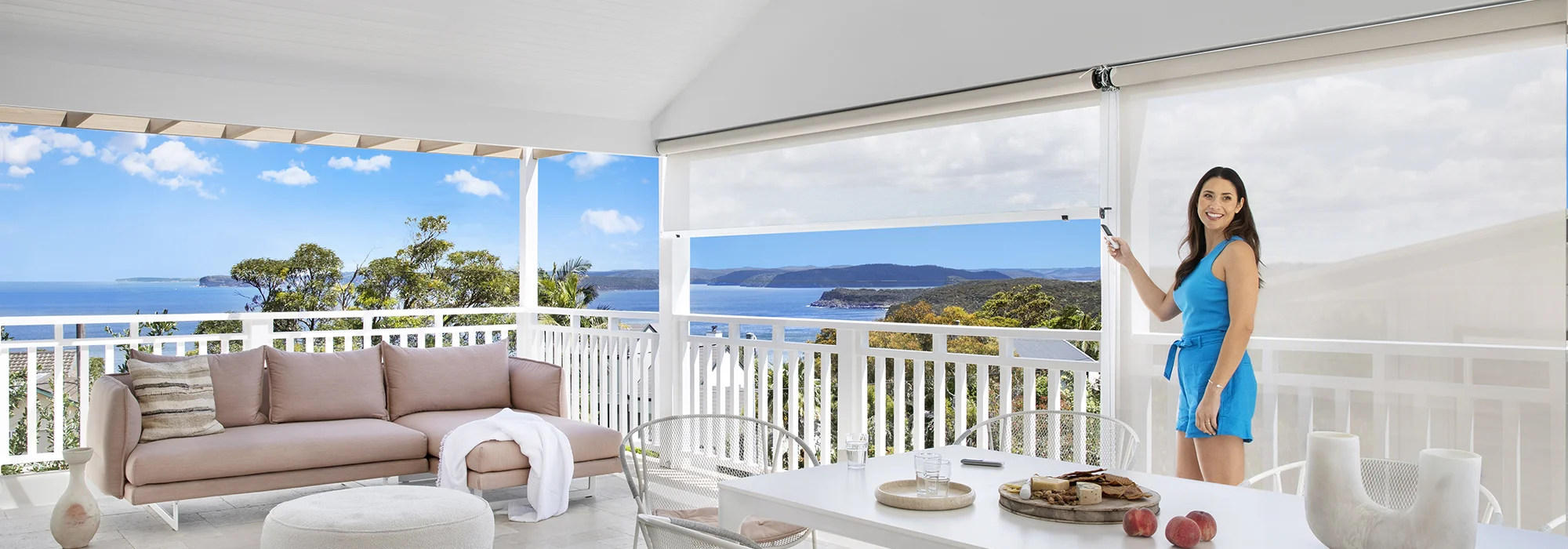
Straight drop outdoor blinds operate vertically, the fabric drops straight down from a roller mounted at the top of the opening. They don’t protrude from the wall, which makes them ideal for windows beside fences or walkways, and for the sides of roofed decks, verandahs, and patios where a projecting awning can’t go.
There are three styles within this category, and the difference between them matters.
Standard straight drop is the simplest option. The fabric rolls down and secures at the base via a strap, locking pin, or dog clip. Straightforward to operate, economical, and works well in sheltered areas where wind exposure is low. If your alfresco area is tucked under eaves or protected from prevailing winds, this is often all you need.
Cable guide takes it a step further. The fabric is guided by tensioned stainless steel cables, 316-grade marine stainless, the same grade used in marine applications, running down both sides. The blind can stop at any height along the cable, which gives you more flexibility over how much you open or close the space. The cable system also keeps the fabric in position in moderate wind. It’s the right choice for coastal properties and any location where the standard straight drop would move around too much in a breeze.
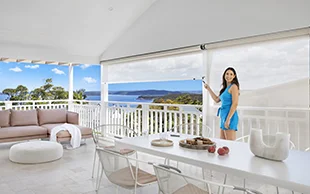
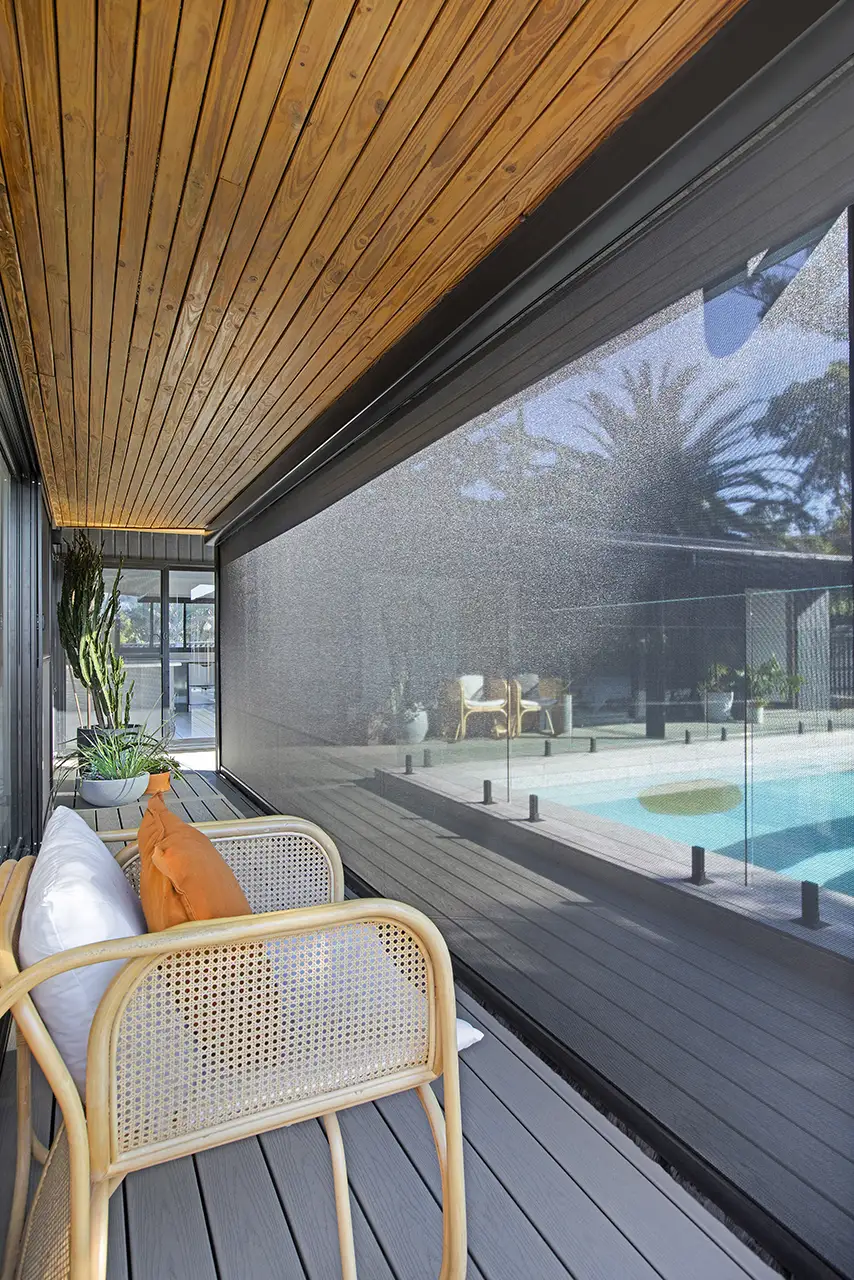
Zip awning is the most weather-resistant option of the three. Hidden zip channels on both sides grip the fabric taut along its full length, the fabric can’t bow, billow, or blow out in the wind. It also significantly reduces gaps for insects and sun penetration at the edges. If you want to create a near-enclosed outdoor room, a courtyard that functions as an extra living space, a patio that’s genuinely sheltered, the zip awning is the product that gets you there.
Fabrics across all straight drop styles include canvas, acrylic (the most popular choice, UV stable, long-lasting, and available in a wide colour range), and clear PVC for situations where weather protection matters but you don’t want to lose the view.
Wynstan straight drop awnings have been independently tested and proven to reduce cooling energy costs by up to 44%, a meaningful difference in a home that faces west or has large glass sliding doors that heat up through the afternoon.
Pivot arm awning: straight drop with airflow
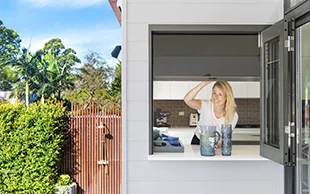
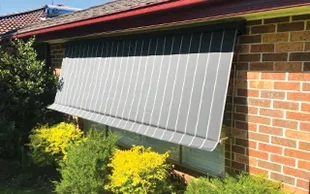
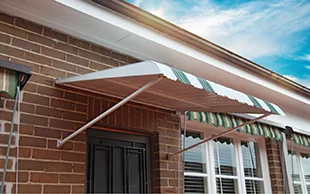
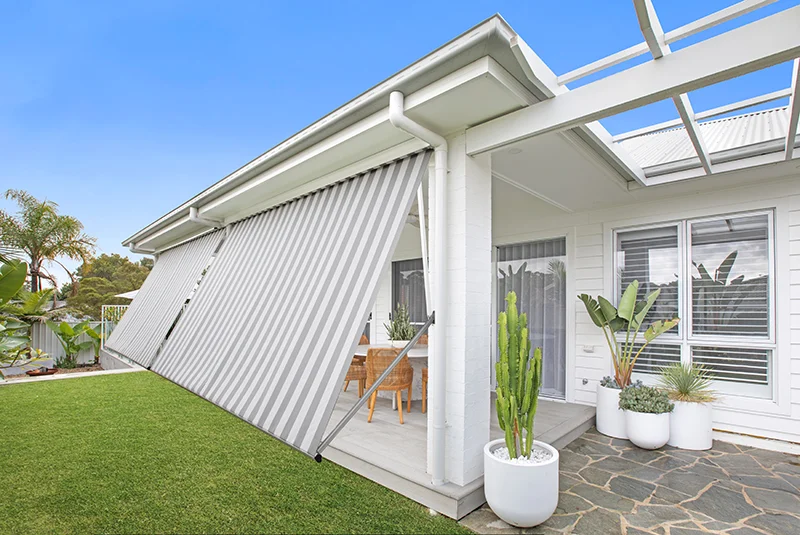
The pivot arm awning is a variation on the straight drop, the key difference is that the arms pivot in an arc as the blind extends, creating a gap between the fabric and the window. That gap allows air to circulate into the home rather than the blind sitting flat against the glass.
If cross-ventilation matters to you, and in an Australian summer, it usually does, the pivot arm gives you shade and airflow at the same time. It suits both windows and doors, and is available up to 5,100mm wide.
Folding arm awnings: overhead shade for open entertaining areas
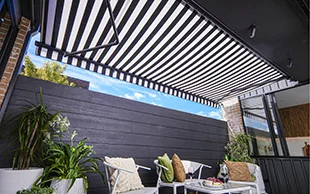
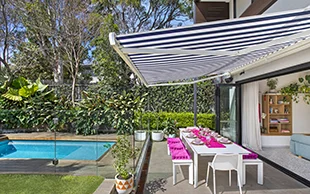
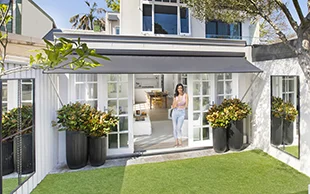
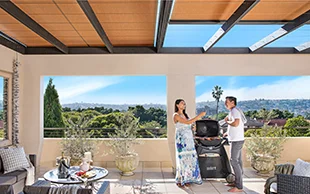
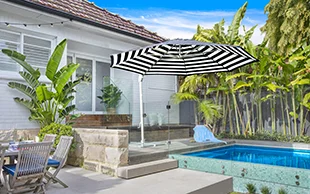
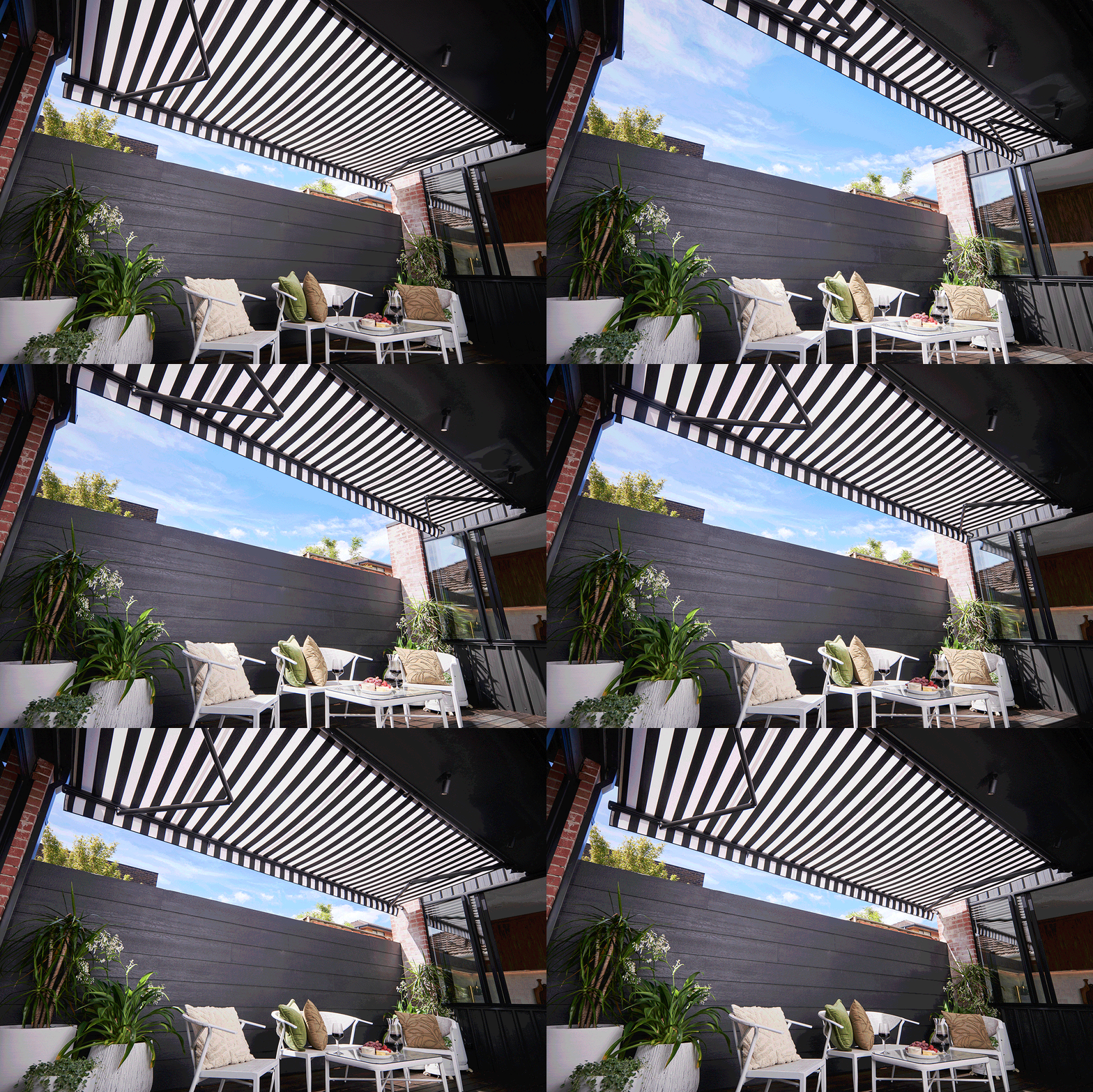
Where straight drop blinds close off the sides of a space, a folding arm awning shades from above. It extends horizontally from the wall on articulated arms that fold away neatly when retracted. There are no vertical posts, the full area beneath stays clear, so people can move freely under the awning when it’s extended.
Folding arm awnings can be manufactured up to 7.1 metres wide, making them genuinely suitable for large entertaining areas. They come in two configurations.
Semi cassette sits under the eaves with an open headbox. It can be operated by manual crank or Wynmotion motor. It’s the right choice for protected locations where the awning is somewhat sheltered when closed.
Full cassette fully encloses the fabric and mechanism in a cassette housing when retracted. This protects the fabric from UV, dust, and weather damage when the awning isn’t in use, extending its lifespan. Full cassette requires Wynmotion motorisation.
One important note: folding arm awnings should always be retracted in strong wind or when the area is unoccupied. They’re shade structures, not storm shelters. The Wynmotion Sun-Wind Sensor (more on this below) can automate retraction when wind conditions exceed a set threshold.
Wind and weather resistance: the honest guide
Wind is the main variable when choosing an outdoor blind in Australia, and different products handle it very differently.
For sheltered areas with low wind exposure, an alfresco area under eaves, a south-facing wall, a courtyard with natural protection, a standard straight drop blind is usually sufficient and the most economical choice.
For moderate wind exposure, coastal properties, elevated decks, open-facing walls, a cable guide blind is the right step up. The stainless steel cables keep the fabric positioned and reduce movement significantly.
For high wind exposure or near-enclosed outdoor rooms, exposed courtyards, patios that catch prevailing winds, areas where insects are a problem, a zip awning is the answer. The zip channel system grips the fabric from both sides along its full length. It doesn’t blow out. It doesn’t gap. It’s the most weather-resistant straight drop option available.
For folding arm awnings in any location, the Wynmotion Sun-Wind Sensor is worth serious consideration. It monitors wind speed and sunlight intensity automatically, extending the awning when the sun is out and retracting it when wind conditions pick up, without any manual input. Sensitivity is adjustable to suit your location. For customers who travel, work during the day, or simply don’t want to think about it, it’s a genuinely useful feature.
Motorised outdoor blinds
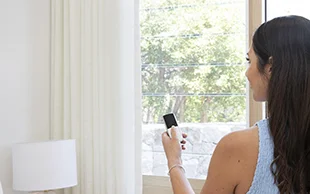
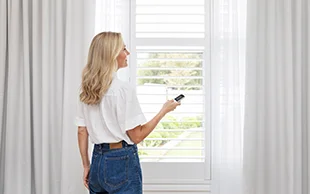
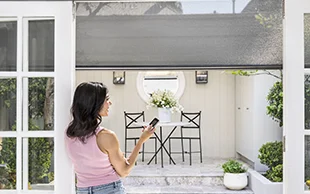
Wynmotion motorisation is available across Wynstan’s full outdoor range, straight drop, cable guide, zip awning, pivot arm, and folding arm awnings. Outdoor motors are mains powered and operated by remote control, wall switch, smartphone app, or voice control via Google Home or Amazon Alexa.
One remote can control all your outdoor blinds and awnings simultaneously, extend them all as guests arrive, retract everything at the end of the evening. Combined with the Sun-Wind Sensor, the whole outdoor setup can run itself.
For more on motorisation across Wynstan’s full product range, see our smart blinds guide.
Matching the right product to your space
Pergola: Zip awning or cable guide for the sides, zip if wind is a factor, cable guide for moderate exposure. If the pergola is open-top, a folding arm awning can provide overhead shade.
Alfresco under eaves: Standard straight drop or folding arm semi cassette. Protected location suits both well.
Exposed deck: Folding arm full cassette for overhead shade; zip awning for the sides if you want to enclose the space.
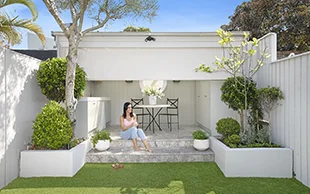
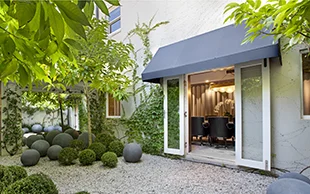
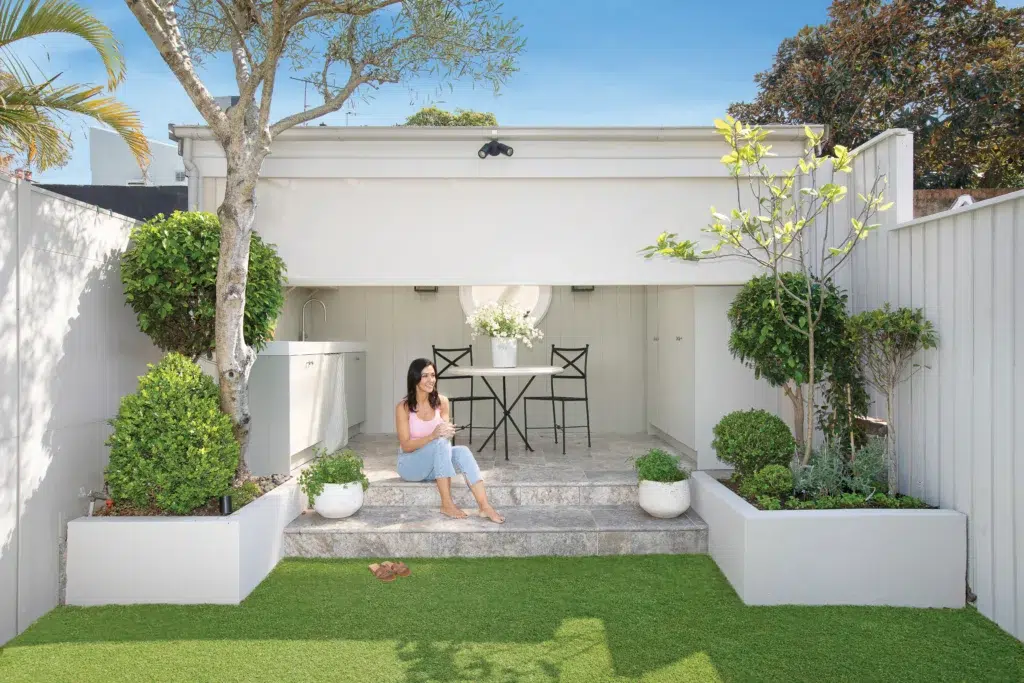
Courtyard: Zip awning. Best wind resistance and closest to an enclosed outdoor room of any straight drop option.
Balcony: Straight drop or cable guide depending on height and wind exposure. Cable guide for anything above ground level or facing open sky.
Coastal property: Cable guide with marine stainless steel cables is the natural choice. The 316-grade cables are built for exactly this environment.
Fabric and colour
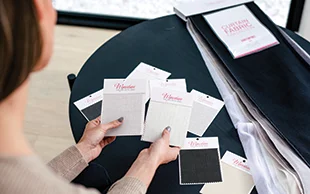
Hardware colours across all Wynstan outdoor blinds and awnings are inspired by the COLORBOND® colour palette, designed to complement most Australian home exteriors without clashing. Eight standard colours are available, with custom colours on request.
For fabric, acrylic is the most popular choice for outdoor applications, UV stable, long-lasting, and available in a wide range of colours. Canvas is a traditional option with a natural look. Clear PVC suits situations where you want weather protection without losing the view.
Ready to sort your outdoor area?
The best next step is a free in-home measure and quote. A Wynstan consultant will assess your space, look at wind exposure and mounting options, show you fabric and colour samples, and give you a quote on the spot. No obligation, no guesswork.
Book your FREE Consultation Today!
This article was written by Shae Rankine, Marketing Coordinator at Wynstan. Shae works closely with product expert Kathy Wang to make sure every piece of content is accurate, practical, and genuinely useful.
Frequently Asked Questions
What are the best outdoor blinds for a pergola?
It depends on the pergola structure and your wind exposure. For the sides of a roofed pergola, a zip awning offers the best weather resistance and a near-enclosed feel, cable guide is a good option for more sheltered situations. For an open-top pergola where overhead shade is the priority, a folding arm awning can cover the area without requiring posts. Your Wynstan consultant can assess the structure in person and recommend the right setup.
Can outdoor blinds withstand wind?
Some can, some can’t, and the honest answer is that the right choice depends on your location. A standard straight drop blind is designed for sheltered areas and will move around in strong wind. A cable guide blind handles moderate wind exposure well, particularly with stainless steel cables keeping the fabric tracked. A zip awning offers the best wind resistance of any straight drop style, the zip channel system holds the fabric taut along its full length so it won’t bow or blow out. For folding arm awnings, always retract in strong wind; the Sun-Wind Sensor can do this automatically.
What is the difference between a straight drop blind and a zip awning?
A straight drop blind hangs freely, the fabric drops and secures at the base, but the sides are open. A zip awning uses hidden channels that grip the fabric along both sides from top to bottom. The result is a blind that stays taut, resists wind significantly better, reduces insect entry, and closes off the sides of the space far more effectively. A straight drop is the right choice for sheltered areas where simplicity and economy matter. A zip awning is the right choice when you want to actually enclose the space.