


Plantation Shutter Materials Explained: Timber, Basswood or PVC, Which Is Right for Your Room?

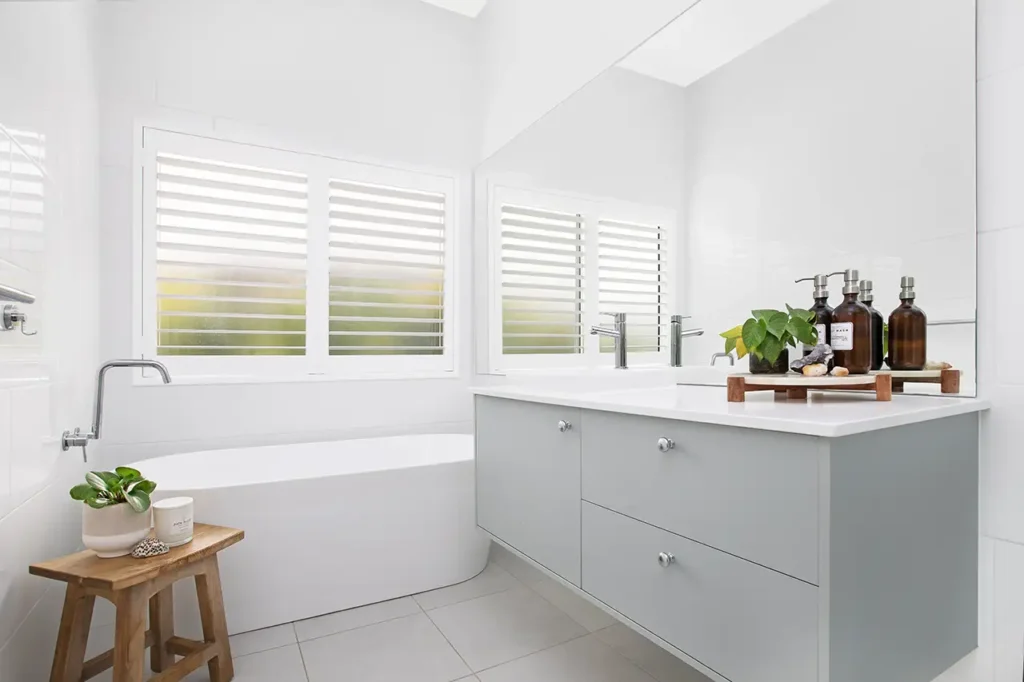
White Plantation Shutters in bathroom with white bathtub and grey benchtop with a white basin

Most people spend a lot of time choosing the style of their plantation shutters, the blade size, the colour, whether to go hinged or bi-fold. The material question tends to come second. And for a lot of customers, it’s the first time they’ve heard there’s a choice to make at all.

There is, and it matters. Not just for price, but for how the shutter performs in a given room and how long it lasts. The good news is that once you understand what each material does, the decision is usually straightforward. Here’s how to think about it.

Hardwood: the everyday choice for most rooms

Hardwood is the most popular plantation shutter material in the Wynstan range, and the starting point for most dry rooms in the home.

The timber used is Paulownia, a light, workable hardwood sourced from sustainable overseas plantation farms grown specifically for shutters. It’s not old-growth timber, it’s farmed for this purpose, which is worth knowing if sustainability matters to your household.

Being lightweight is an advantage that compounds over time. Lighter panels put less stress on the hinges, which means the shutter hangs better, opens and closes more smoothly, and is less likely to sag or drop on its frame over the years. On larger panels especially, say, 900mm wide by 2100mm tall, the difference in weight between a timber and PVC panel is meaningful.

One thing that surprises most customers: at Wynstan, hardwood sits at the entry-level price point. That’s the opposite of what most people expect, and the opposite of how most competitors structure their ranges. It’s the result of Wynstan working hard with suppliers on hardwood pricing, which is why hardwood sells the most. If you’ve been quoted elsewhere with PVC as the cheapest option, Wynstan’s pricing works differently.

Hardwood suits: living rooms, bedrooms, home offices, dining rooms, and any dry room where you want the warmth and classic look of timber.

Basswood: when the window needs a wider panel

Basswood is a slightly harder, marginally heavier timber with one key practical advantage: it can be manufactured in wider single panels than hardwood, up to around 950mm compared to hardwood’s 900mm.

That difference sounds small, but it can change how a window is configured. Take a 1,600mm opening as an example. In hardwood, that window might be split into two panels. In PVC, with its narrower maximum width, it could require three panels. More panels means more visible joins, more installation complexity, and a busier look on the window. Where basswood’s wider panel width lets you achieve the same coverage in fewer panels, the result is cleaner.

At Wynstan, basswood is recommended in two situations: when a window opening genuinely requires a wider single panel than hardwood can accommodate, or when a customer needs to match an existing basswood installation elsewhere in the home. It’s not the default, hardwood handles most applications well, but it’s the right call when panel width is the deciding factor.

Wynstan product expert Kathy Wang notes that the panel width question often only becomes clear at the measure and quote stage, when the consultant looks at the actual opening and works out the best configuration. It’s one of the reasons an in-home consultation matters, panel maths isn’t something to guess from a photo.

Basswood suits: any dry room where the window opening requires a wider single panel, or where matching an existing basswood installation is needed.

PVC: the only sensible choice for wet areas

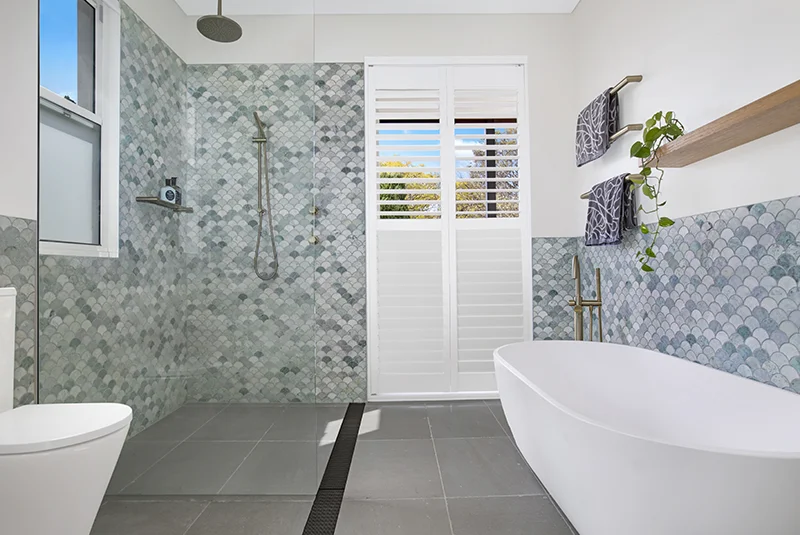
In bathrooms, toilets, laundries, and kitchens with significant steam and condensation, the material decision is simple: PVC.

Timber, both hardwood and basswood, can absorb moisture over time. The paint used on plantation shutters isn’t fully waterproof, and in a sustained wet environment, timber panels can swell, warp, and deteriorate. It’s the same reason you wouldn’t put a fabric blind in a steamy bathroom and expect it to last.

PVC doesn’t have this problem. It handles humidity and condensation without swelling or warping, and lasts significantly longer in wet-area applications than any timber alternative. For bathrooms and toilets especially, PVC is the recommendation regardless of price.

One thing to know about PVC on larger panels: it’s heavier than timber, and on very tall windows, particularly panels over 900mm wide and 2100mm tall, that extra weight can cause PVC to sag slightly on its hinges over time. In wet areas this trade-off is worth it. In dry rooms where timber is suitable, the lighter weight of hardwood is a genuine long-term advantage.

PVC suits: bathrooms, toilets, laundries, and kitchens with heavy steam or condensation. In these rooms, always PVC, regardless of which material is cheaper.

Quick reference: material by room

Bathroom / toilet / laundry: PVC handles moisture without warping or swelling.

Kitchen with heavy steam near the window: PVC, same moisture reasoning applies.

Living room / dining room: Hardwood, lightweight, good-looking, suits large panels well.

Bedroom: Hardwood, lighter on the hinges, comfortable in a dry environment.

Home office / study: Hardwood, practical, low maintenance, handles the room well.

Any room needing a wider single panel: Basswood, where hardwood’s maximum width isn’t sufficient.

Matching an existing installation: Match the existing material, your consultant can confirm what’s in place and what’s needed to align.

What your consultant works through at the free measure and quote

Material is one of the first decisions a Wynstan consultant covers, but it doesn’t happen in isolation. Material choice affects panel width, which affects configuration, which affects how the window looks from inside and out. A bathroom window in PVC may need more panels than the same opening would in timber, and the consultant will work out the best configuration for your specific opening before anything is quoted or ordered.

They’ll also look at reveal depth, frame options, and blade size, all of which interact with the material decision in ways that aren’t obvious until you’re looking at the actual window. That’s what the free measure and quote is for.

Book your FREE Consultation Today!

    By providing and submitting your details, you agree to Wynstan's Privacy Policy.

    This article was written by Shae Rankine, Marketing Coordinator at Wynstan, with input from product expert Kathy Wang. The Michelle and Marty Taupau partnership is managed by Holly Braham, Brand Manager at Wynstan.

    Share:

    Free Consultation Enquiry

      By providing and submitting your details, you agree to Wynstan’s Privacy Policy.

      Fabric Samples

      Search fabric sample

      1. Explore

      Browse over 400 fabric sample options for roller binds, panel glides, roman blinds and curtains too.

      fabric samples floating

      2. Shop

      Add five FREE samples to your cart and we’ll ship them straight to your door! You can even add more for a small fee.

      fabric samples floating icons

      3. Book

      Love your choices? Book in a FREE measure and quote to take the next step to transforming your home.

      Fabric Samples

      Magnifying Glass

      1. Explore

      Browse over 400 fabric sample options for roller binds, panel glides, roman blinds and curtains too.

      Fabric

      2. Shop

      Add ten FREE samples to your cart and we’ll ship them straight to your door! You can even add more for a small fee.

      Calendar

      3. Book

      Love your choices? Book in a FREE measure and quote to take the next step to transforming your home.