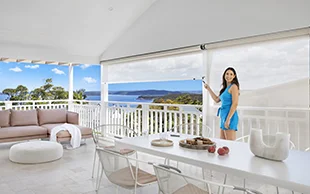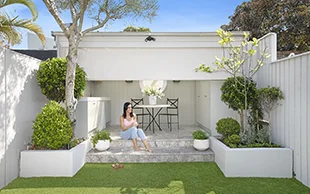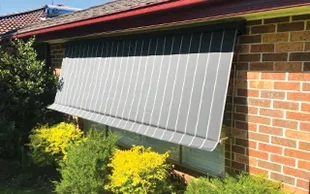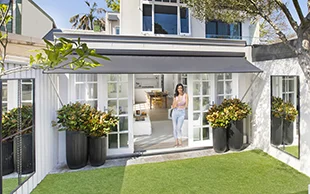

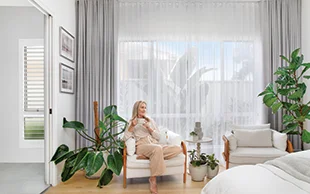
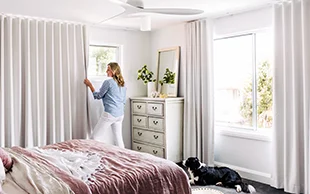
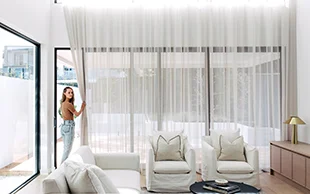


Roller blinds are the most popular window covering in Australian homes, and it’s not hard to see why. They’re neat, practical, and work in almost every room and window type. Pull them up and they practically disappear. Pull them down and the room transforms. They do the job without fuss, and they look good doing it.
If you’re thinking about roller blinds for your home but not sure where to start, this guide covers everything, fabric, operation, sizing, room-by-room advice, and what the whole process looks like from first call to final install. We asked Wynstan’s product expert Kathy Wang to help make sure we got the details right.
First things first: custom-made matters
Not all roller blinds are created equal. The roller blinds you’ll find flat-packed at a hardware store are cut to standard sizes and fitted with whatever gap remains. They let in light around the edges, they don’t sit flush, and they rarely look quite right.
Wynstan roller blinds are made to measure, every one of them, cut to the exact dimensions of your window at our Yennora factory. That means a clean fit, proper light control, and a blind that looks like it belongs there.
The mechanism matters too, not just the fabric. A quality roller blind runs smoothly and quietly, clunky or loud operation is a sign of cheaper internal components. Wynstan’s controls are tested to a 10,000-cycle life, which means 10,000 trips up and down before the mechanism is even considered for replacement. Smoother operation also means less friction on the chain over time, fewer breakages, and a longer lifespan overall.
Choosing your fabric
The fabric is the most important decision you’ll make. It determines how much light comes in, how much privacy you have, and how the room feels.
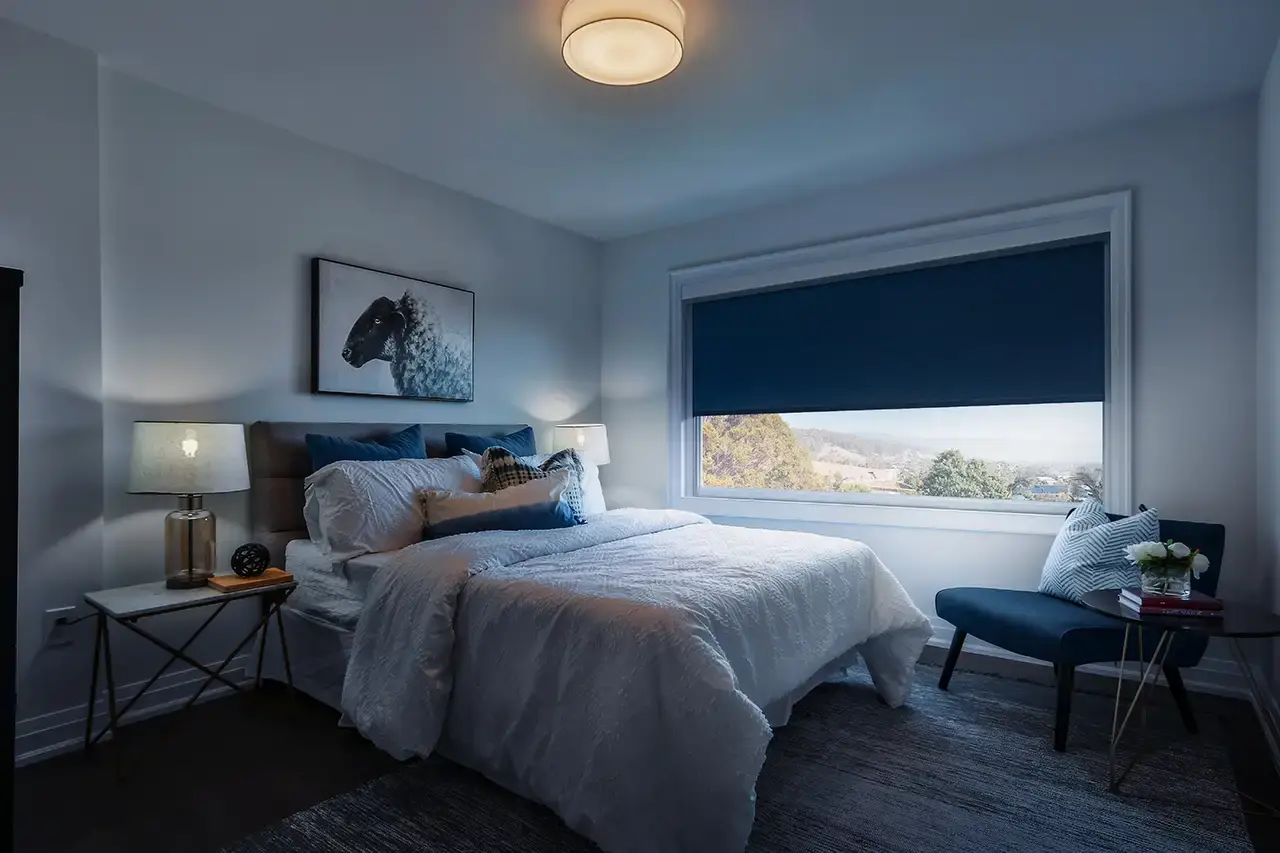
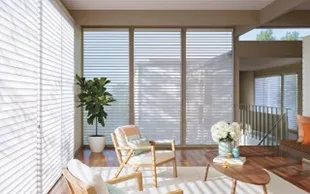
There are five main fabric types: blockout for genuine darkness (bedrooms, media rooms), translucent for softened natural light with daytime privacy (living rooms, kitchens), sunscreen for glare reduction without losing the view (living rooms facing gardens, home offices), sheer for a soft decorative layer, and moisture-resistant for kitchens and bathrooms that need a wipe-clean fabric that won’t deteriorate in humidity.
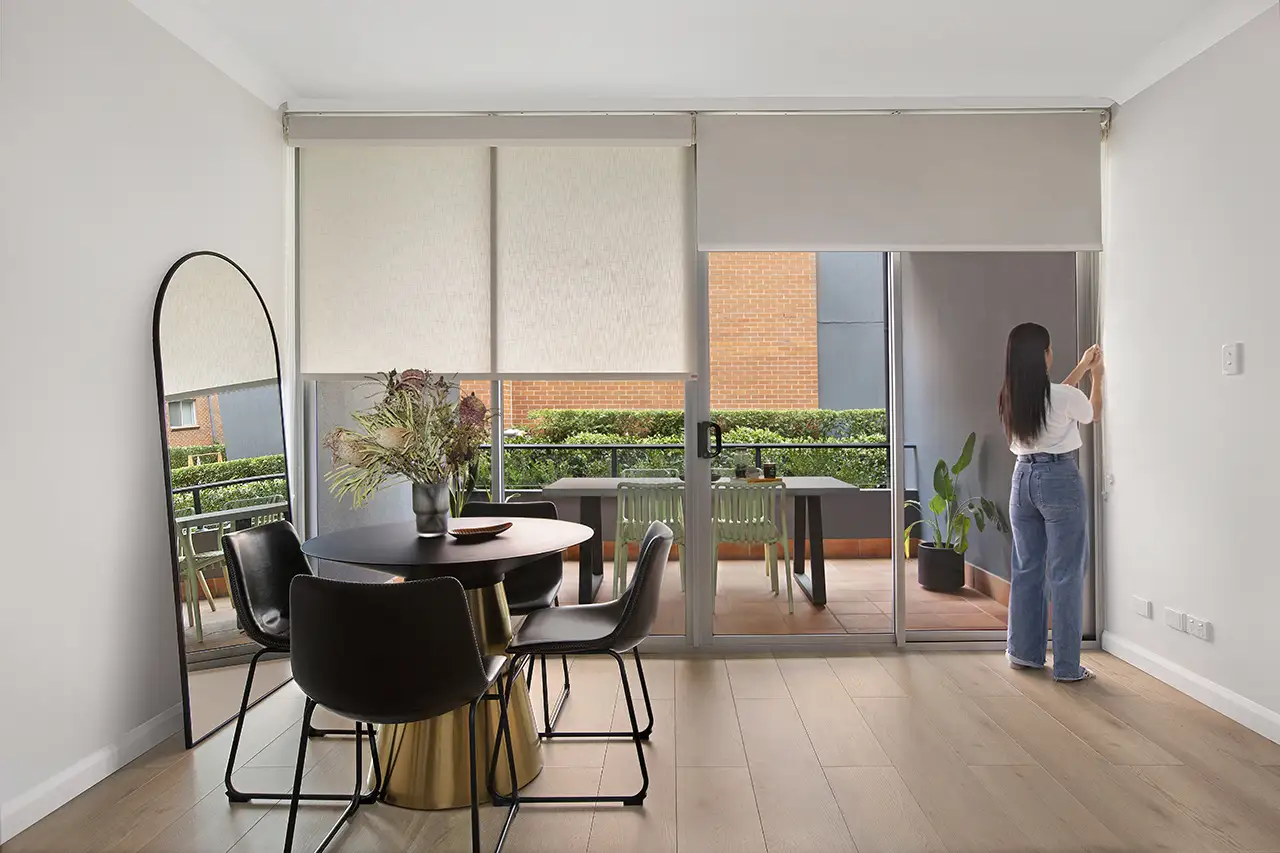
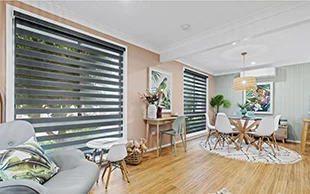
One distinction worth understanding: translucent fabric blurs the view so people outside see only a silhouette, solid daytime privacy. Sunscreen fabric lets you see through it clearly, which means it offers no privacy at night when your lights are on inside. For bedrooms and living rooms where night privacy matters, the Dual Roller is the answer.
The Dual Roller puts two fabrics on a single bracket, typically a sunscreen during the day and a blockout at night. One bracket, one clean look, two blinds doing exactly what you need at different times of day.
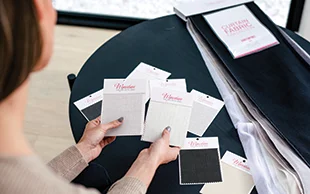
You can browse our blind fabric samples online to get a feel for colours and textures before your consultant visits. For a full breakdown of every fabric type and which rooms they suit best, read our Roller Blind Fabrics guide.
Choosing how they operate
Once you’ve sorted the fabric, the next decision is how the blind goes up and down. There are three options.
Chain pull is the standard. A chain on the side raises and lowers the blind. Simple, reliable, and the most economical choice. Works well in most rooms and most situations.
Cordless/spring has no chain at all, you raise or lower the blind by pressing gently on the bottom rail. It’s the right choice for children’s rooms and anywhere a looped cord is a safety concern.
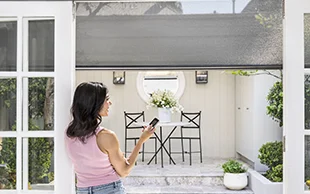
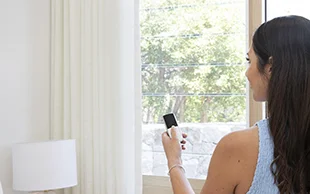
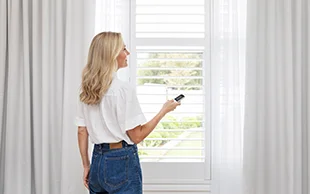
Wynmotion motorisation takes it a step further. A rechargeable battery motor, no electrician required, lets you operate your blinds by remote, wall switch, smartphone app, or voice control via Google Home, Amazon Alexa, or Apple Siri. You can set schedules so they open with the morning light and close at dusk automatically. One remote can control every blind in the house.
On charging frequency, Kathy Wang puts it plainly: it depends on the size of your blind and how often you use it. A large blockout on a big window will need charging more often than a small translucent in a home office, expect anywhere from once to four times a year. One thing to avoid: leaving the motor on charge overnight repeatedly, as that depletes the battery faster over time.
Motorisation is worth considering seriously, not just for convenience, but for families with young children where eliminating cords entirely is a genuine safety benefit. High windows, stairwells, and hard-to-reach spots are also strong cases for motorising and forgetting about it entirely.
Sizing and mounting
Roller blinds can be mounted in one of two ways.
Inside the recess (called a reveal fit) gives a built-in, streamlined look. The blind sits within the window frame. It’s the cleaner option aesthetically, but will always leave some side light gaps.
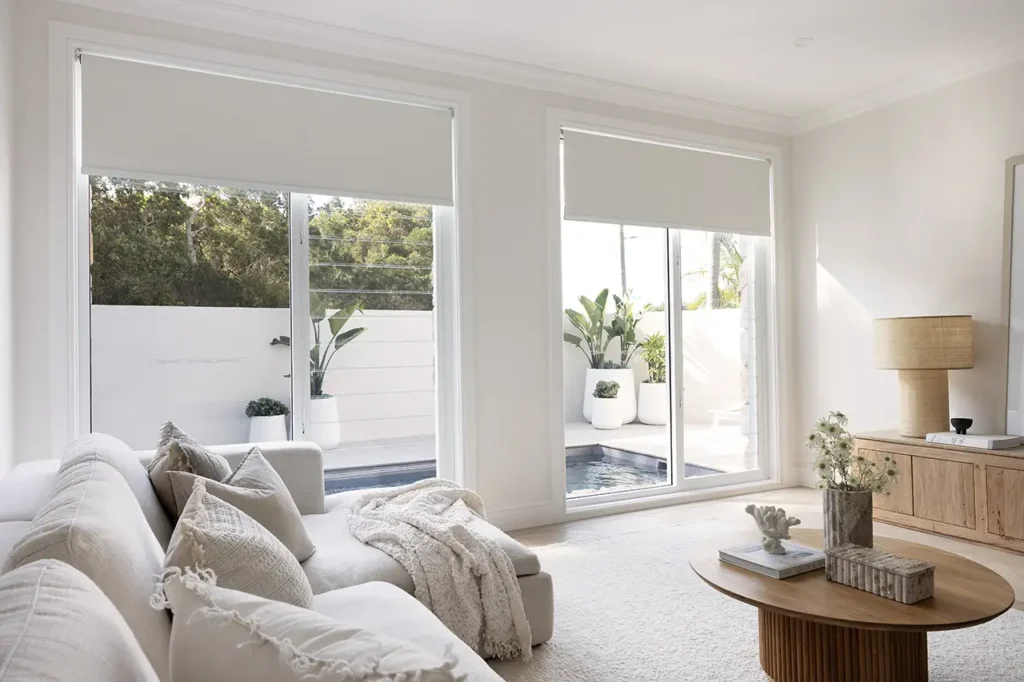
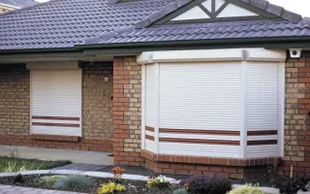
Outside the recess (called a face fit) means the blind is mounted on the wall above the window, covering a larger area. This is the better choice for blockout applications, it significantly reduces side light gaps and makes the window appear larger too.
What most people don’t realise is that the wall material affects how a blind gets installed. Timber, brick, and plasterboard all require different fixing approaches, and plasterboard in particular limits where screws can safely anchor. Kathy Wang flags this as one of the most common sources of DIY measuring mistakes: getting the fixing surface wrong, or not accounting for what’s in the way, a window handle, a bulkhead overhead, tiles at the bottom. It’s exactly the kind of thing a Wynstan consultant picks up in person that’s easy to miss on your own.
Your consultant handles all of this. You don’t need to touch a tape measure.
Room by room
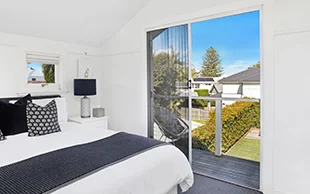
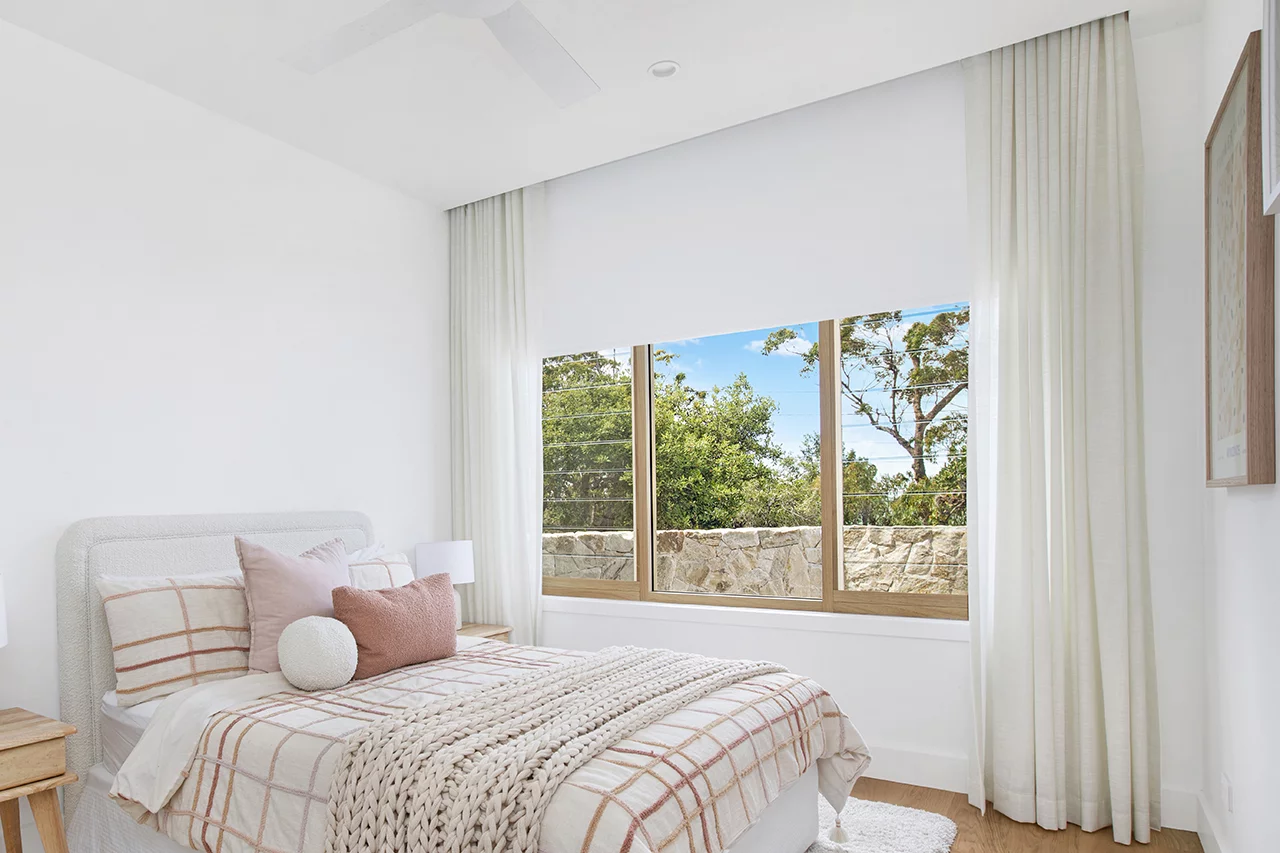
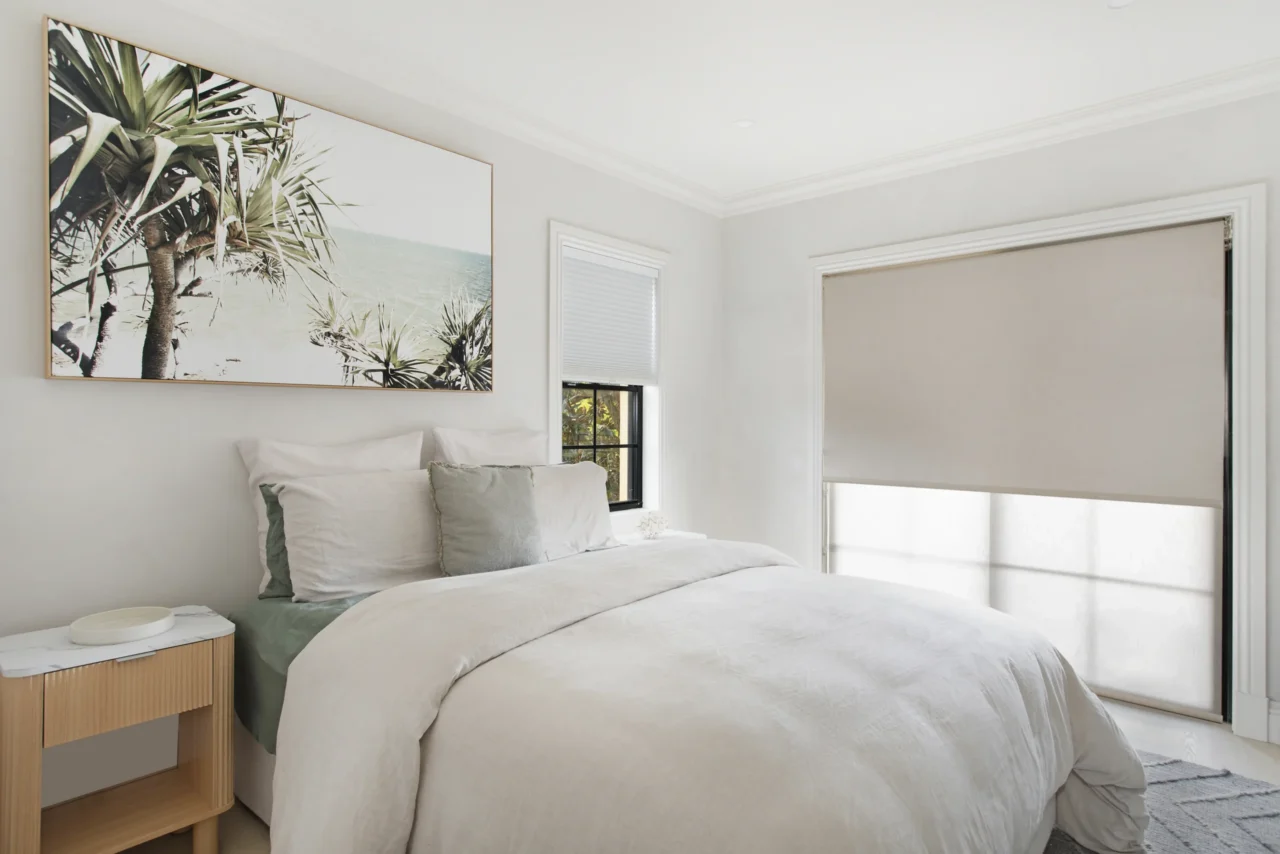
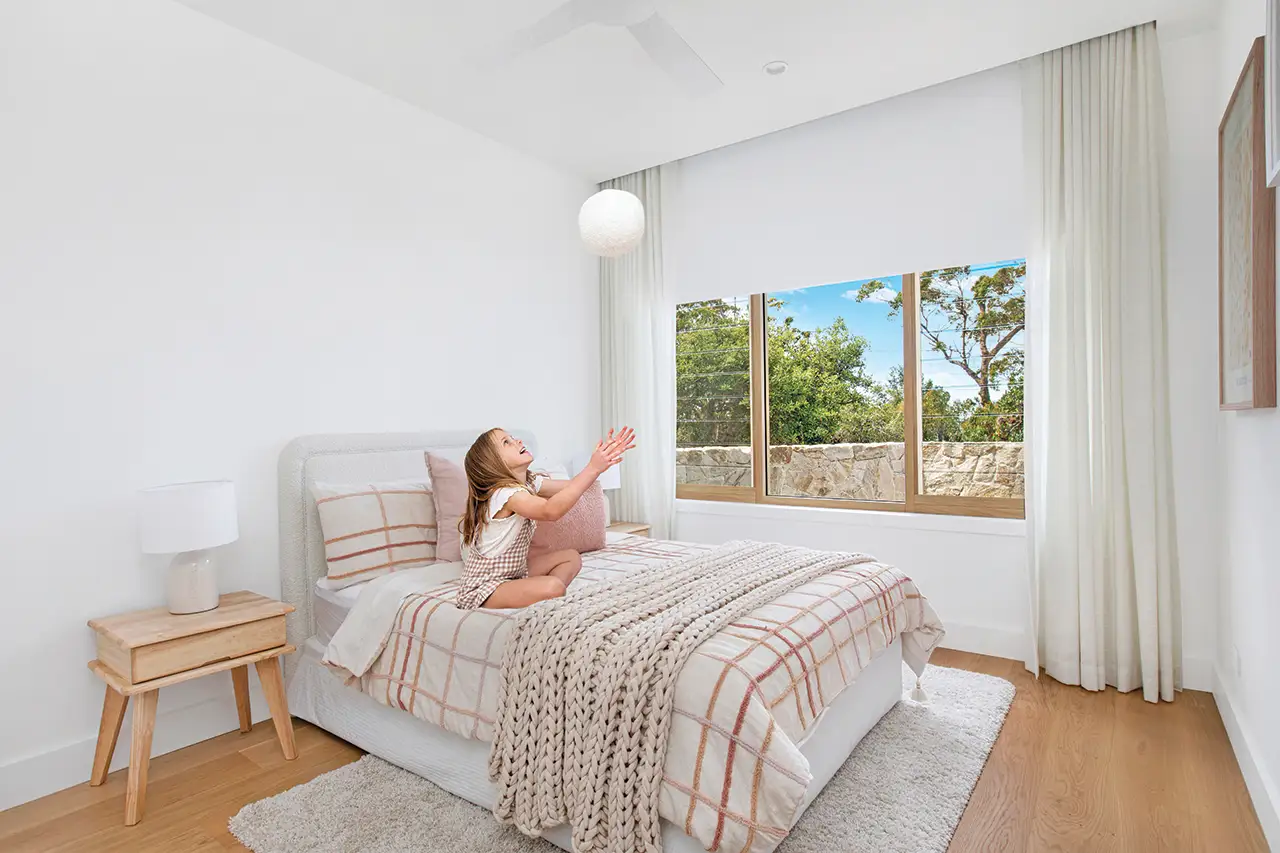
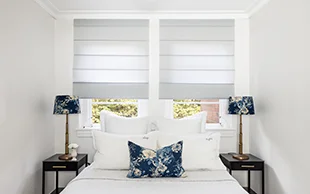
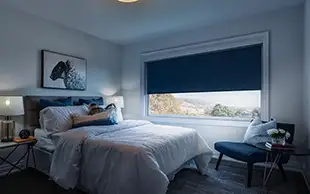
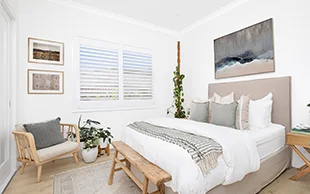
Bedroom: Blockout fabric. Mount outside the recess for best results. Ask about reverse roll, where the fabric comes over the front of the tube rather than behind it, which sits closer to the glass, reduces light bleed further, and looks neater when the blind is down. Motorisation is popular here, open the blinds without getting out of bed.
In the Taupau renovation, the master bedroom balcony door got a blockout roller in Linesque Almond paired with a curtain panel to soften the corner. From outside the windows read as one. From inside, each product is doing the right job for that specific opening.
Children’s bedroom: Blockout fabric with cordless or motorised operation only. No looped chains in kids’ rooms.
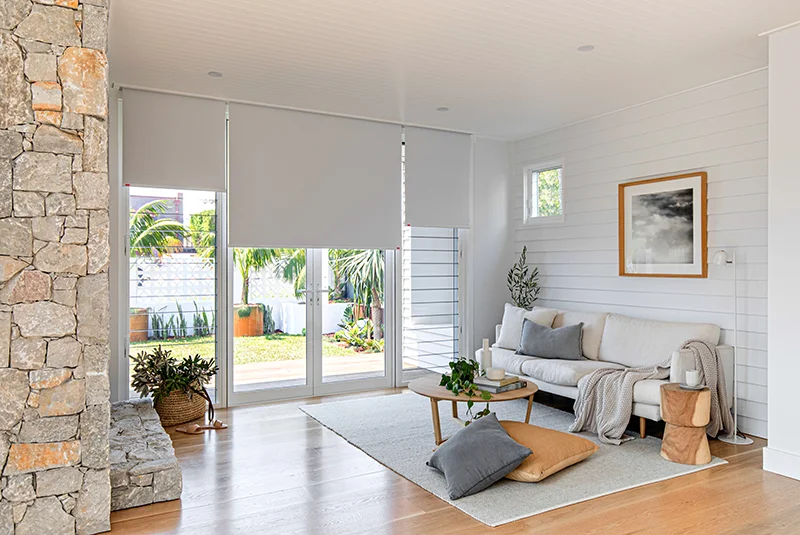
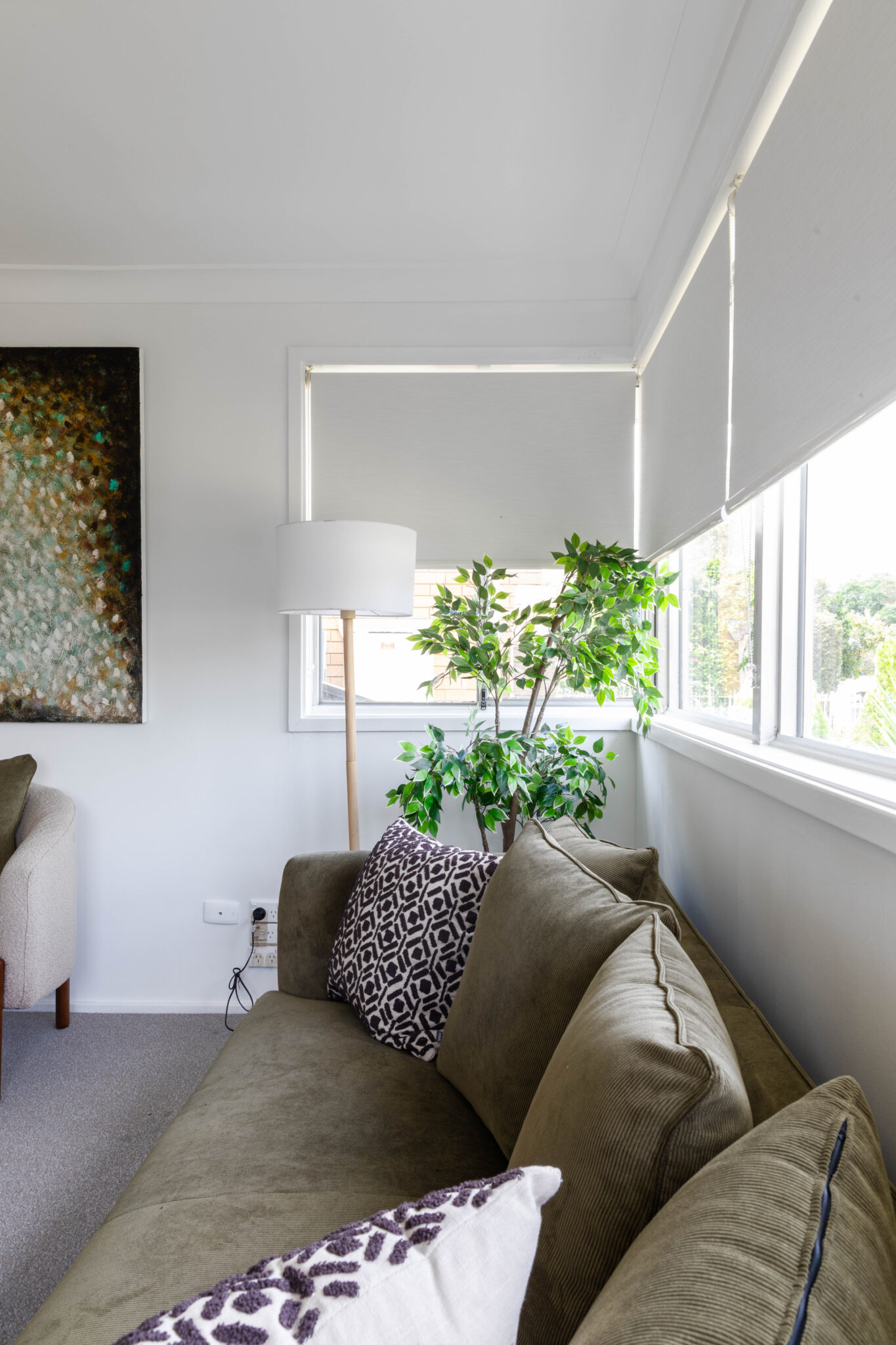
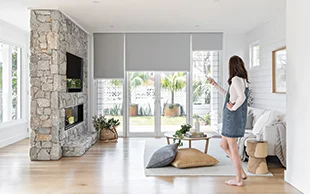
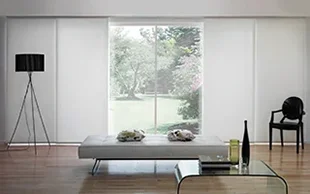
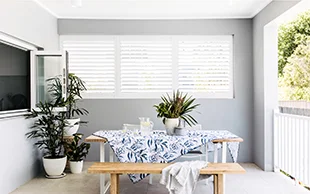
Living room: Dual roller is the best all-rounder, sunscreen during the day, blockout at night. Translucent works well if full darkness isn’t a priority. Roller blinds also layer well with curtains when you want to add softness to a room, in the Taupau home, the front living room used a roller blind in Linesque Almond with Rejuvenate Linen curtain panels either side, sitting comfortably alongside the period details of the home without competing with them.
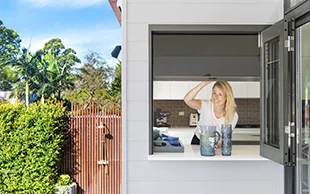
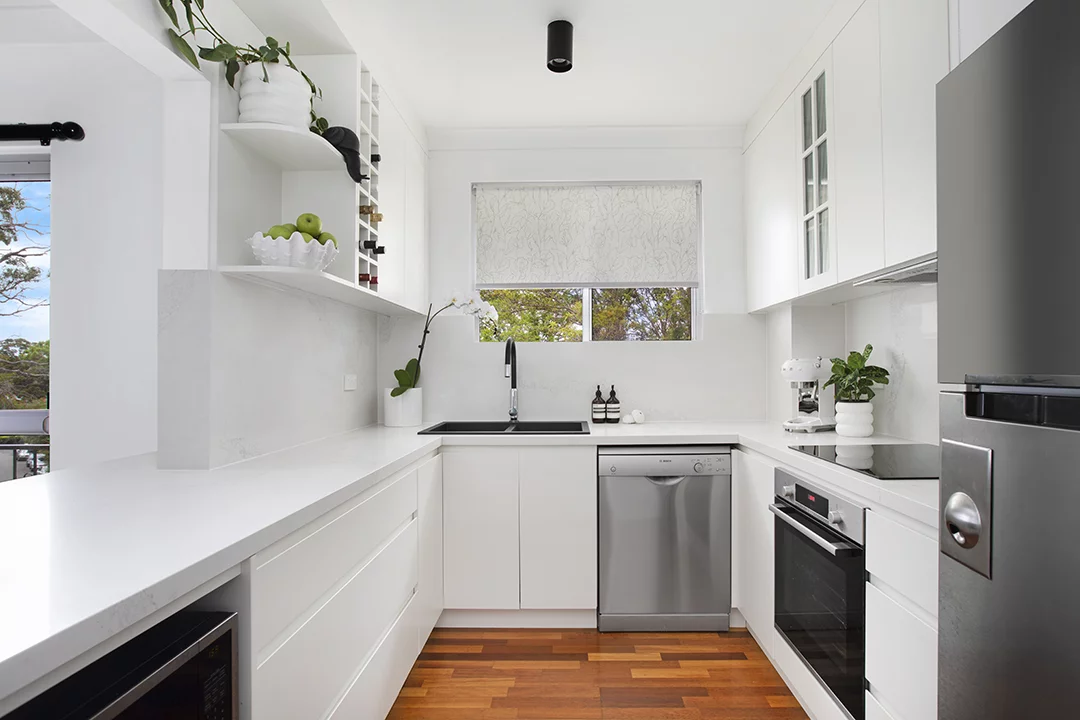
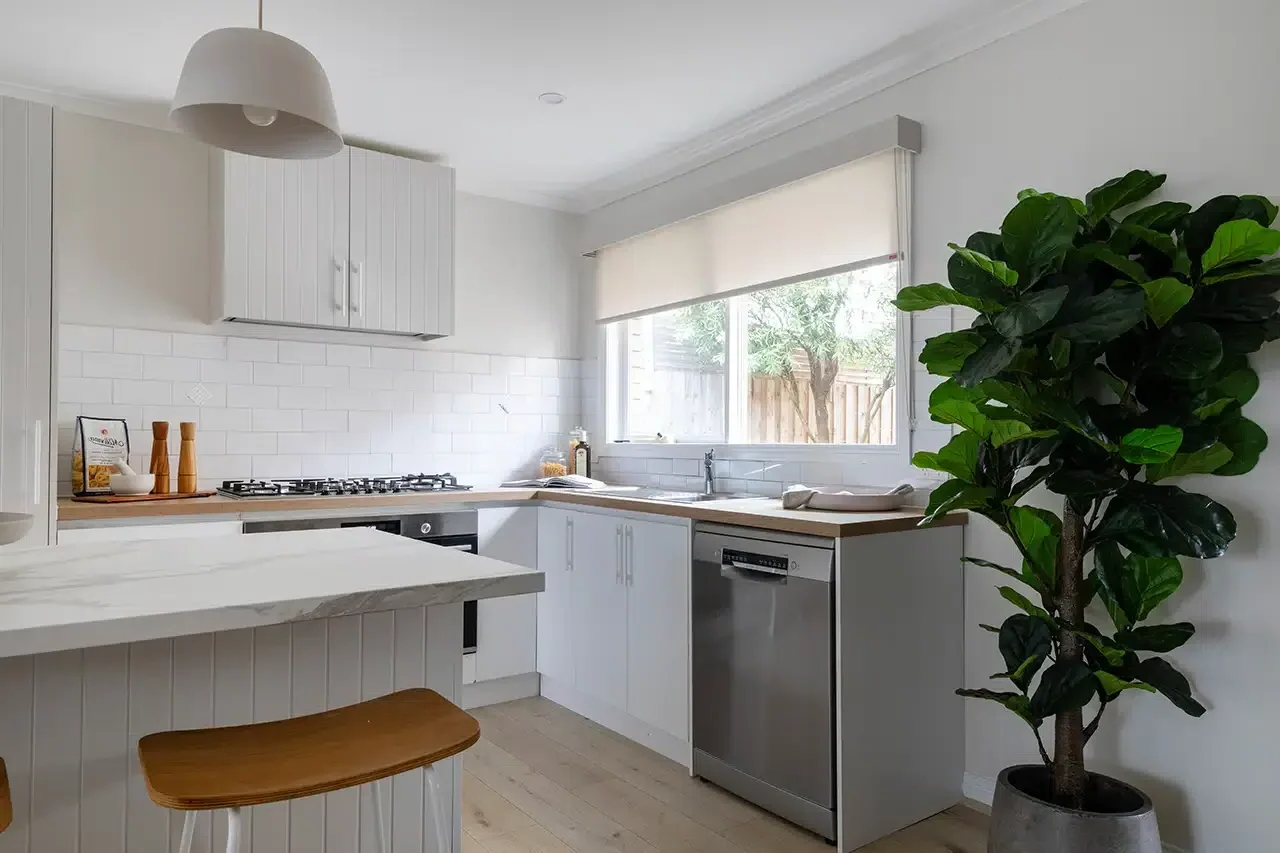
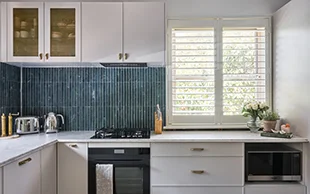
Kitchen: Flat translucent or moisture-resistant fabric. Easy to clean is the priority, avoid textured fabrics and standard sunscreen near a cooktop, where grease can get caught in the weave over time.
Bathroom: Moisture-resistant fabric. Privacy is the priority and the blind needs to handle humidity without deteriorating. A plastic or nylon chain is worth considering in bathrooms to avoid any rust risk over the long term.
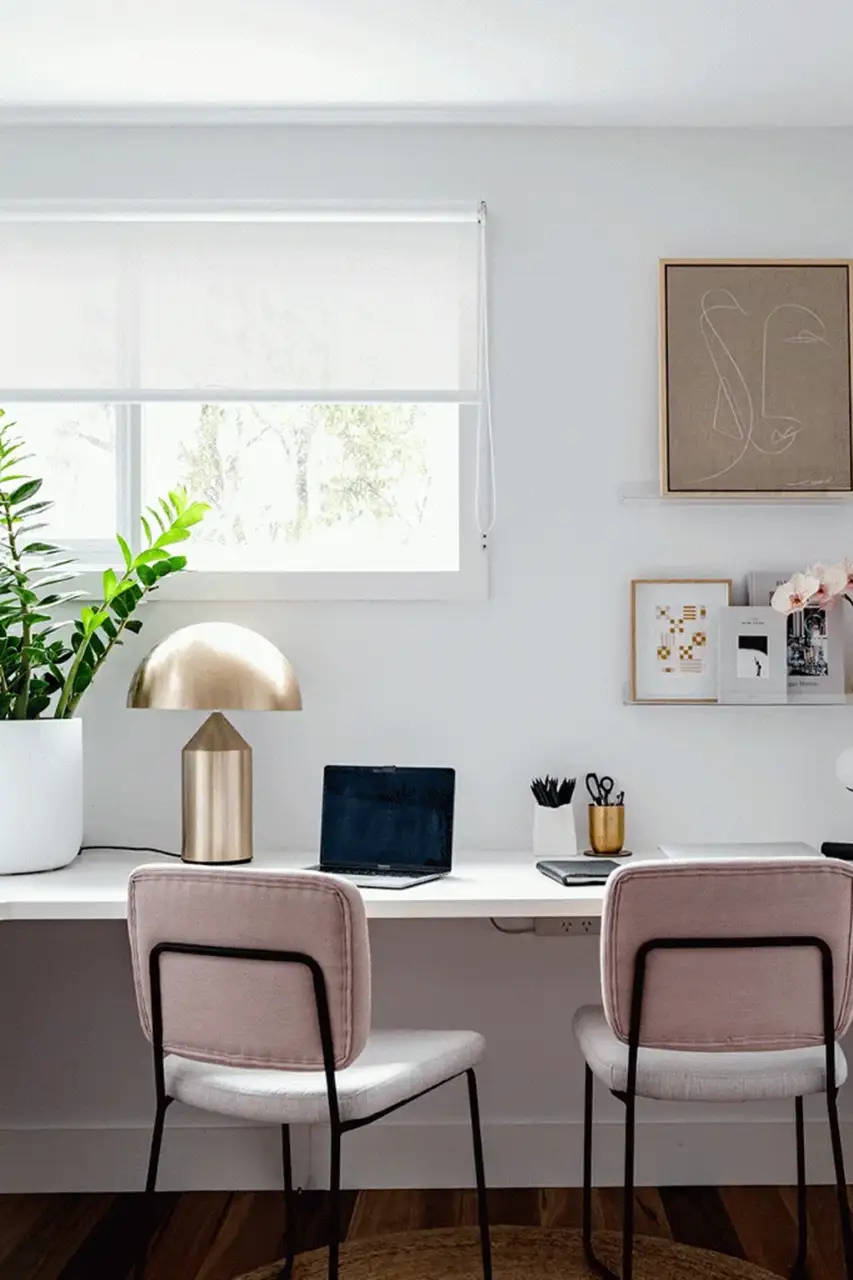
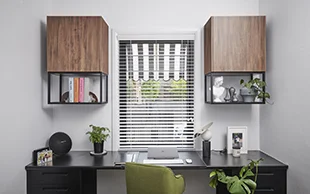
Home office: Sunscreen fabric. Cuts glare on screens while keeping the room bright and maintaining your view.
What to expect from measure to install
The process is straightforward, and Wynstan handles every step.
You book a free in-home measure and quote, a consultant comes to you, at a time that suits. They’ll measure every window, show you fabric samples in the actual room and light conditions, talk through your options, and give you a quote on the spot. They’ll also flag anything that could cause a problem, a window handle that’s in the way, a shallow reveal that needs a face fit, a kitchen fabric that won’t hold up over a cooktop.
That’s how Michelle and Marty Taupau got every window right across six different window situations in their Sydney renovation, a different solution for each one, all working together as a whole. It’s how most Wynstan customers do it.
Your blinds are then custom-made at our Yennora factory. When they’re ready, our installation team comes back and fits them. You don’t need to book a separate tradesperson, source your own hardware, or touch a drill. It’s all included.
All Wynstan roller blinds come with a 3-year warranty. Wynmotion motorisation carries a 5-year warranty.
Book your FREE Consultation Today!
This article was written by Shae Rankine, Marketing Coordinator at Wynstan, with input from product expert Kathy Wang. The Michelle and Marty Taupau partnership is managed by Holly Braham, Brand Manager at Wynstan.