There are more blind types for windows than most people realise and the right one depends on your room, which way your windows face, and how much light you actually want coming in. At Wynstan, we’ve been helping Australian homeowners work through exactly this decision since 1968. More than 70% of Wynstan customers looking for blinds are choosing roller blinds but that doesn’t mean they’re right for every window in your home.
Here’s an honest guide to every blind type we make and supply, what each one does best, and how to match them to your home.
What are the different types of window blinds?
The main blind types available in Australian homes are roller blinds, vertical blinds, Veri Shades, roman blinds, venetian blinds (aluminium and timber), and honeycomb blinds. Each has a different mechanism, suits different rooms, and gives you different levels of light control and privacy.
The short answer to which is best: it depends on the room, your aspect, and what you need the blind to do. Here’s how each one works.
Roller Blinds
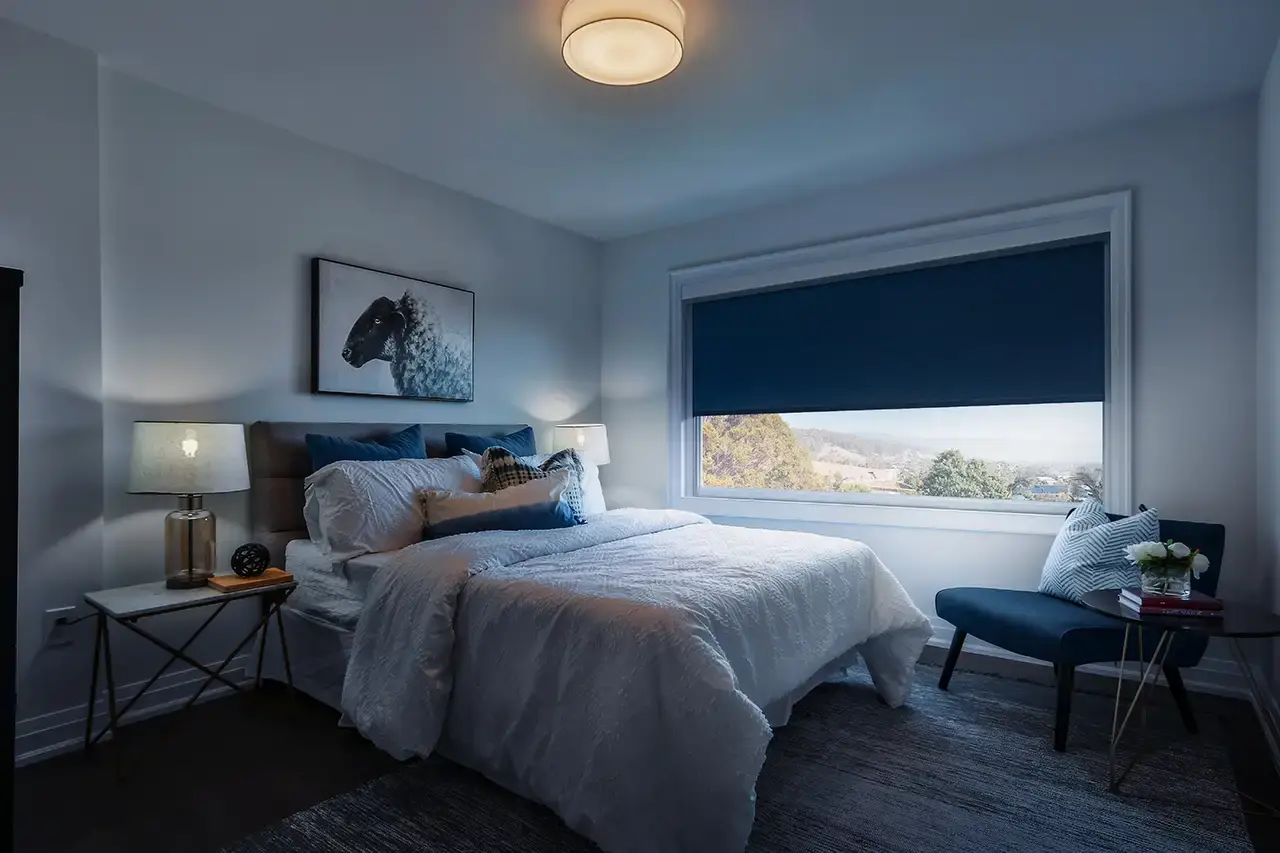
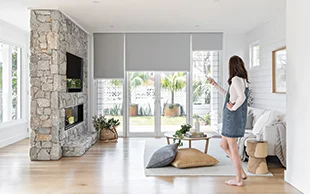
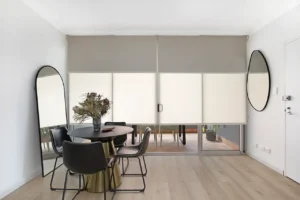
Roller blinds are our most popular blind by a significant margin. They’re made in Australia at our Yennora factory in Sydney, and they suit the widest range of rooms, window sizes and budgets.
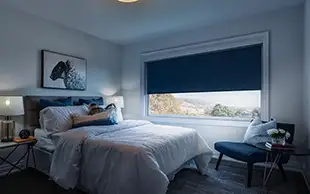
The key choice is fabric. Blockout fabric gives you complete darkness, no light gets through. Sunscreen and translucent fabrics filter and soften incoming light while maintaining your view and your privacy during the day. A double roller system gives you both in one neat unit: a translucent fabric for daytime use, a blockout for night.
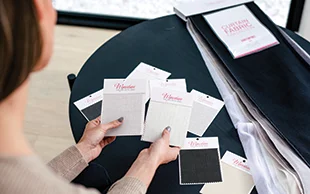
Our most popular blockout fabric is Linesque Almond, a warm, neutral tone that works across a wide range of interiors. For translucent, Palm Beach Melody is our top seller, offering a soft filtered light with a subtle texture. Both are available to order as free samples from our website.
Best for: bedrooms, living rooms, home offices, west and north-facing windows
Options: single or double rollers, blockout, sunscreen or translucent fabrics, motorisation, fascia or cassette housing.
Siesta Blinds - total blackout for bedrooms and nurseries
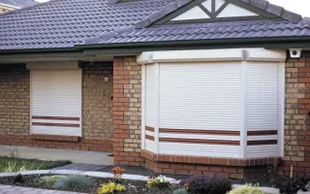
Siesta blinds are a specialised roller blind fitted with a zip track system on both sides of the window. The track locks the fabric edge against the frame so no light can creep around the sides, something a standard roller blind, even with blockout fabric, can’t fully prevent.
The result is complete, total darkness. If you work night shift and need to sleep during the day, or if you have a baby or young child whose sleep depends on a properly dark room, a Siesta blind is the most effective solution available. No gaps, no light bleed, no compromise.
Best for: night shift workers, nurseries, babies’ rooms, media rooms, anyone who needs complete blackout rather than just blockout
How it’s different from a standard blockout roller: the zip track seals the fabric against the window frame on both sides, no light gets through the edges
Vertical Blinds
Vertical blinds are our second most popular blind type at Wynstan. They’re the practical go-to for sliding doors and large windows, individual slats stack left, right, centre or split, so you can control exactly how much of the opening you expose. Individual slats can be replaced if damaged, making them a long-lasting option for high-traffic areas.
Best for: sliding doors, wide windows, rental properties, high-traffic areas
Veri Shades - the stylish alternative
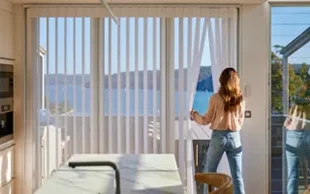
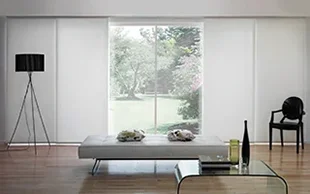
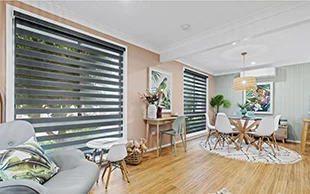
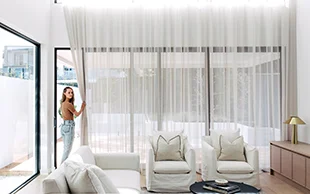
If you like the function of a vertical blind but want something with more visual appeal, Veri Shades are worth a look. They combine the practicality of a vertical blind with the softness of a sheer curtain, alternating panels of sheer and blockout fabric that rotate to control light and privacy, and stack neatly to the side when fully open.
They operate like a vertical blind but look closer to a curtain. If you’ve been wondering what people are replacing vertical blinds with, Veri Shades are the most popular answer at Wynstan.
Best for: living rooms, sliding doors, anyone who wants the function of a vertical blind with a more refined look
Venetian Blinds
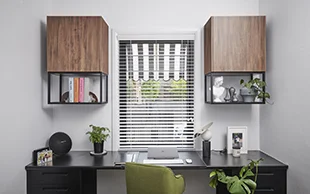
Venetians give you precise, adjustable light control through horizontal slats you tilt, raise or lower. Two main materials suit different rooms and budgets.
Aluminium Venetian Blinds
Practical, economical and custom-cut to any window size. Made from 95% recycled aluminium, available in dozens of colours and finishes; satin, gloss, matt, brushed and pearlised.
Best for: kitchens, bathrooms, offices, west-facing rooms, budget-conscious renovations
Timber and Faux-Timber Venetian Blinds
Timber venetians add warmth and texture that aluminium can’t replicate. Real cedar and basswood options are available alongside PVC timber-look alternatives that handle humidity better, making faux-timber the smarter choice for kitchens and bathrooms where real wood may warp.
Best for: living rooms, bedrooms, any room where you want a natural, warm finish
Roman Blinds
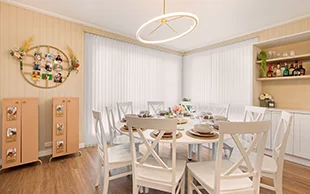
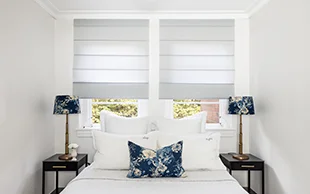
In 2026 there has been more of a shift towards roman blinds with more texture and warmth in Australian interiors bringing roman blinds back into the conversation, particularly in dining rooms, bedrooms and studies where you want fabric softness without floor-length curtains.
When raised, the fabric folds into neat horizontal panels. When lowered, they sit flat and elegant.
Best for: dining rooms, bedrooms, studies, any room where texture and warmth are part of the brief
Honeycomb Blinds (Cellular Blinds)
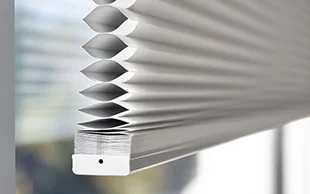
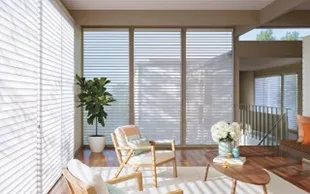
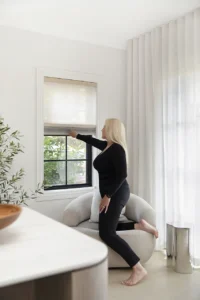
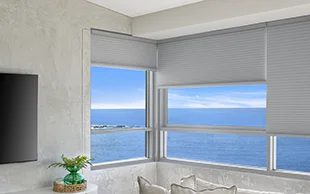
Honeycomb blinds are a growing category here at Wynstan, and increasingly chosen as an alternative to roller blinds, particularly for bedrooms and living rooms where thermal performance matters.
The cellular structure traps a layer of air between the fabric and glass, providing real insulation against both heat and cold.
What sets them apart from rollers visually: when raised, honeycomb blinds stack away almost invisibly. There’s no visible roll at the top of the window, just a clean, neat stack of fabric that all but disappears. For rooms where the view matters as much as the light control, that’s a meaningful difference.
Like rollers, honeycombs work best in a dual fabric setup: a translucent fabric for daytime privacy, a blockout for complete darkness. Both in one clean unit.
Best for: bedrooms, living rooms, thermally challenging rooms, anyone who wants a cleaner look than a roller
Options: Blockout or light-filtering fabric options; dual fabric systems available
Frequently Asked Questions When Selecting Blinds
Are blinds still in style in 2026?
Yes and the direction is interesting. The trend in 2026 is toward more texture, warmth and layering. Roman blinds are being chosen more often for the tactile quality of their fabrics. Honeycomb blinds are growing in popularity for their thermal performance and clean profile. Roller blinds with sunscreen or translucent fabric are increasingly chosen over plain blockout because they provide daytime privacy while still letting light filter through, a softer, more considered result than simply blocking everything out.
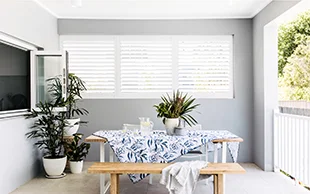
Shutters remain popular, particularly plantation shutters for living rooms and main bedrooms. And Veri Shades are emerging as the go-to replacement for traditional vertical blinds in living rooms with sliding doors.
Does the direction your windows face affect which blind you should choose?
It’s one of the most useful questions to ask before you buy, and one our consultants work through on every measure and quote. Here’s a practical guide:
West-facing windows and sliding doors: These cop the harshest afternoon sun. Blockout roller blinds are the recommended choice, they cut the heat and glare completely.
North-facing rooms: Sun exposure throughout the day makes these rooms candidates for honeycomb blinds, which insulate against heat coming in and help maintain a stable room temperature. A double roller with sunscreen fabric is also effective for managing light without losing the connection to outside.
East-facing bedrooms: Morning sun means an early wake-up unless you have blockout. A dual fabric roller or honeycomb with a blockout layer is the recommended setup.
South-facing rooms: Less direct sun, so light control is less critical than insulation. Honeycomb blinds work well here for keeping warmth in during winter.
How much do fitted blinds cost?
Every Wynstan blind is custom-made to your exact window measurements, so there’s no off-the-shelf price. The cost depends on the blind type, fabric choice, size of the window, and number of windows. What’s included in every order is professional installation, our team fits your blinds for you, so you’re not left working out how to hang a custom-made blind yourself.
The best way to get an accurate cost is a free in-home measure and quote, our consultants come to you, assess every window, and give you a clear price before you commit to anything.
What is the most popular type of blind in Australia?
Roller blinds are the most popular choice for Wynstan customers. They suit the widest range of window sizes and room types, and the fabric options have expanded significantly in recent years. Vertical blinds are second, followed by a growing share for honeycomb blinds as more homeowners prioritise thermal performance alongside aesthetics.
Are honeycomb blinds worth it?
Yes, particularly for bedrooms and living rooms in homes that experience temperature variation. The cellular structure provides genuine insulation: it keeps heat out in summer and warmth in during winter. They also stack more neatly than a roller blind when raised, with no visible roll at the top of the window.
Not sure which blind is right for your home?
The best way to work it out is to see your options in your own space, in your light, against your walls, on your windows. Our consultants visit you at home, bring samples, assess your needs and find the right solution for your home. Every blind is custom-made and professionally installed.
Book your free in-home measure and quote below
This article was written by Kathy Wang, Wynstan’s Product Manager. With 10 years at Wynstan, Kathy works directly with the teams behind our Yennora factory and knows every fabric, mechanism and blind type in the range, from our bestselling roller blinds through to specialist products like Siesta blinds.